When the Whole Town Ran on the Same Clock — And Nobody Felt Late
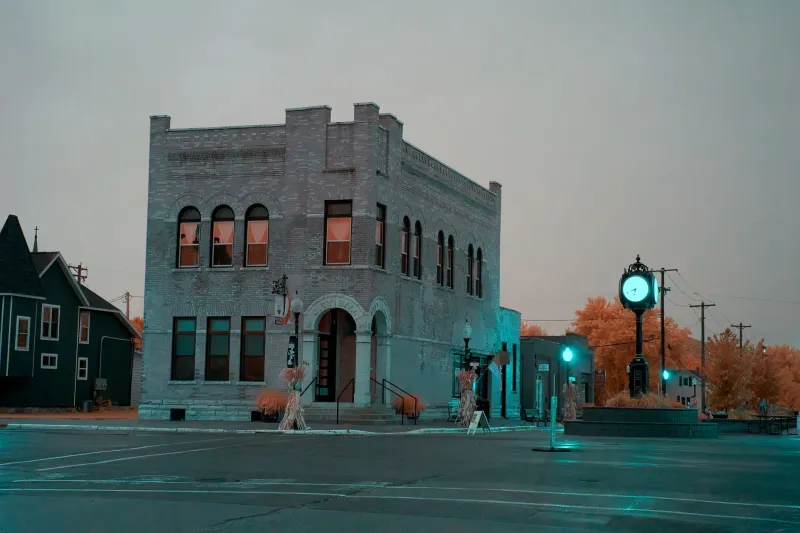
In the center of almost every American town built before 1920, you'll find a clock tower if you look. It might be on the courthouse, the church, the old train depot, or the brick face of a long-closed bank. Many of them still work. Most of them go unnoticed.
For the people who built those towns, that clock wasn't decorative. It was infrastructure — as essential as the water supply and the main road. It was the device that made collective life possible.
The Clock That Belonged to Everyone
For most of American history, ordinary people didn't own personal timepieces. Pocket watches existed, but they were expensive — a quality watch in the mid-1800s could cost a skilled laborer several weeks' wages. Clocks were household possessions only for families with the money to afford them, and even then, keeping them accurately calibrated was a genuine challenge.
What filled the gap was public timekeeping. Church bells rang the hours. Factory whistles announced the start and end of shifts. Courthouse clocks chimed on the quarter-hour, audible for blocks in every direction. In port cities, a time ball — a large sphere dropped from a fixed mast at exactly noon — let ship captains set their navigational chronometers from the harbor.
The practical genius of this system was that it required nothing from the individual. You didn't need to own anything. You didn't need to check anything. You just listened, or looked up, and the time was there — announced to the whole community simultaneously, free of charge, impossible to miss.
In that sense, time wasn't something you possessed. It was something you shared.
The Rhythm of the Whistle
For working-class Americans in the industrial era, the factory whistle was the most powerful clock in their lives. It didn't just tell time — it organized time. The morning whistle pulled men and women out of bed. The noon whistle emptied the floor for lunch. The end-of-shift whistle released entire neighborhoods back into the streets at once.
This created a visible social pulse. When the five o'clock whistle sounded at the textile mill or the ironworks, you could watch the town change. Streets that had been quiet filled suddenly with people. Diners started their rush. Kids knew their fathers were coming home. The whole community shifted gears together, on cue, at the same moment.
There was something genuinely communal about it — a kind of acoustic democracy. The factory owner and the floor sweeper heard the same whistle. The banker's wife and the laundress across the alley both looked up at the same courthouse clock. Time was the one resource distributed completely equally, announced to everyone without preference or exception.
The Watch That Changed Everything
The mass-market wristwatch arrived in America in earnest after World War I, when soldiers who'd worn military-issue watches on the Western Front came home and kept the habit. By the 1930s and '40s, a decent watch had become affordable enough for middle-class families. By the postwar boom years, they were nearly universal.
 Photo: Western Front, via imgv2-1-f.scribdassets.com
On the surface, this was just convenience. You no longer had to listen for the church bell or crane your neck toward the courthouse. The time traveled with you, strapped to your wrist, available at a glance.
But the deeper shift was more significant. Time became private. It became personal. And gradually, subtly, it became a source of individual anxiety in a way it had never quite been before.
When the whole town ran on the same clock, lateness was a community-scale concept. The train was late. The shift started late. These were events that happened to groups. When everyone carried their own personal timepiece, lateness became an individual failure — a personal moral shortcoming, measurable to the minute.
From Shared Rhythm to Personal Pressure
The smartphone completed what the wristwatch started. Today, most Americans carry a device that knows the time to the exact second, synchronized automatically to atomic clocks via satellite, and capable of alerting you — with a buzz against your hip — that you have eleven minutes until your next calendar event.
We have never been more precisely calibrated. We have never been more anxious about time.
Studies consistently find that Americans feel more pressed for time than previous generations did, even as labor-saving technology has theoretically freed up hours that manual work once consumed. We schedule more, track more, and optimize more — and somehow feel like there's never enough.
The old shared clock couldn't tell you what you were doing at 2:47 on a Tuesday. It just told you it was afternoon, and that the shift would end in a few hours, and that Sunday services started at ten. It gave you enough structure to function and enough looseness to breathe.
The Clock Tower Still Stands
Next time you drive through a small town, notice the clock tower. In a lot of places, it's still there — sometimes still running, sometimes frozen at whatever hour the mechanism finally gave out, preserved more as heritage than as utility.
That tower was a community's agreement about time. It said: we all live inside the same hours, on the same schedule, in the same place together. There was a kind of solidarity in that — a shared acknowledgment that your day and your neighbor's day were running in parallel, governed by the same chime.
Now everyone carries their own clock, their own calendar, their own perfectly personal schedule. We're more precisely on time than any previous generation. We're also more alone in our time than any previous generation.
The courthouse clock is still up there. Nobody looks at it anymore. They're all looking down.