The Kid Who Knew Every Secret on Your Block — Before the News Feed Replaced the Front Page
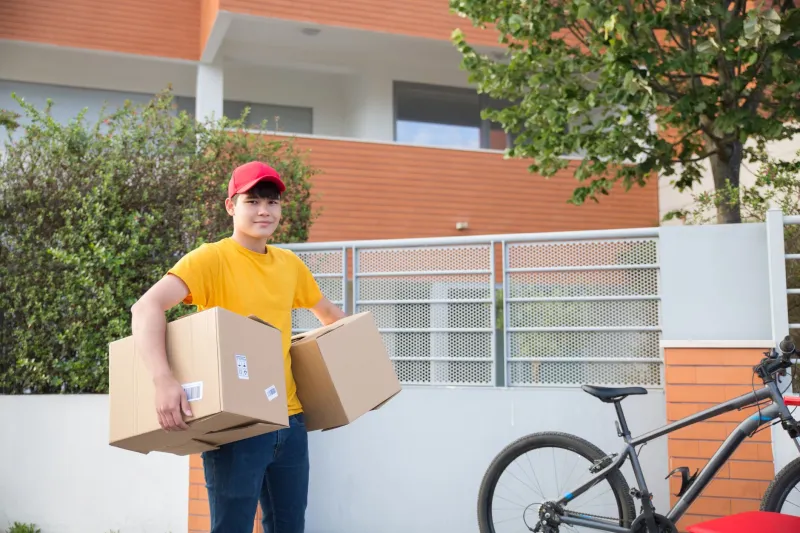
He was out before sunrise, before the coffee was on, before most of the neighborhood had formed a single conscious thought. The paperboy — and it was almost always a boy, twelve or thirteen, working a route he'd memorized like a second address book — moved through the pre-dawn dark with the quiet authority of someone who belonged there. Every house. Every porch. Every mailbox slot that stuck a little on cold mornings.
By the time you came downstairs, the news was already waiting. Same paper. Same front page. Same headlines as every other house on the block.
That sameness was the whole point.
A Shared Version of Reality
For most of the twentieth century, local news was a genuinely communal experience. Your city had a paper — maybe two — and nearly everyone who wanted to stay informed read one of them. The front page decided what mattered today. The editorial board shaped how your city understood itself. The local section told you about the school board vote, the new stoplight going in on Route 9, the Little League team that made it to regionals.
You could walk into the barbershop, the diner, or your neighbor's kitchen and assume that the person in front of you had read roughly the same things you had. Disagreements happened — they've always happened — but they happened against a shared backdrop of common facts. The argument started from the same paragraph.
The paperboy was the physical embodiment of that shared experience. He wasn't curating anything. He wasn't filtering based on your reading history or your political leanings or how long you'd lingered on a particular story last Tuesday. He was delivering the same folded bundle to the retired schoolteacher at number 12 and the factory foreman at number 34 and the young couple who'd just moved into the rental at the end of the cul-de-sac.
Everyone got the same news. Full stop.
The Route as Relationship
What gets overlooked in any nostalgic account of the local paper is the human infrastructure that delivered it. The paperboy wasn't just logistics. He was a fixture — someone who knew your house's rhythms well enough to notice when something was off. Carriers often reported missed pickups when elderly customers stopped collecting their papers, sometimes alerting families to medical emergencies before anyone else knew to check.
In return, subscribers knew their carrier. Holiday tips came in envelopes with handwritten notes. Customers held the door open on rainy collection days. There was a transactional warmth to the whole arrangement that made it feel like something more than commerce.
The local paper itself operated the same way. Reporters covered city council meetings because they lived in the city. The editor knew the mayor personally, for better and worse. The paper's fate was tied to the community's fate — when local businesses struggled, ad revenue fell; when the town thrived, the paper grew. That alignment created accountability of a kind that's genuinely difficult to replicate when your news organization is headquartered in another state and optimizing for national clicks.
When the Algorithm Took the Route
The collapse of local newspapers in America over the past two decades is one of the most significant and least dramatic cultural shifts of modern life. It happened slowly, then all at once. Craigslist gutted classified ad revenue. Digital advertising migrated to platforms that had no interest in funding journalism. Papers shrank, merged, or vanished. More than 2,500 local newspapers closed between 2005 and 2023, according to research from Northwestern University's Medill School.
What replaced them wasn't nothing. It was something arguably more powerful and far less accountable: the algorithmic feed. Facebook, Twitter, and their descendants didn't just change how Americans read news. They changed what news each American saw. The feed learned your preferences, surfaced stories that kept you engaged, and quietly built a version of reality tailored specifically to you.
The result is that your neighbor down the street — the one who used to get the same paper from the same kid at the same hour — now inhabits a substantially different information environment than you do. Not just different opinions. Different facts. Different stories. Different versions of what happened yesterday.
The shared front page is gone, and there's nothing to replace the social function it served.
What a Common Story Did for a Community
This isn't purely sentimental. Political scientists and sociologists have spent years documenting the downstream effects of local news decline: lower voter turnout in local elections, reduced civic participation, decreased trust in local institutions, and a growing inability for neighbors to have productive disagreements because they're no longer starting from the same set of facts.
When everyone reads a different front page — or no front page at all — the common conversation fractures. You can't argue about the school board vote if half the neighborhood doesn't know there was one. You can't build consensus around local problems that nobody's covering anymore.
The paperboy, in his unglamorous pre-dawn rounds, was doing something quietly essential. He was maintaining the informational commons — the shared space where a community's story was told to all of its members simultaneously.
The Folded Bundle We Threw Away
We didn't set out to destroy local news. We just stopped paying for it, one cancelled subscription at a time, because the internet offered something faster and free. The paperboy aged out of his route and nobody replaced him. The press runs got smaller. The staff got cut. The paper got thinner.
And somewhere in that slow erosion, neighborhoods lost a story they used to tell together — about themselves, their city, their shared concerns. What we got instead was louder, more personalized, and infinitely more divisive.
The algorithm knows what you want to read. The front page knew what your community needed to discuss. Those are not the same thing, and we're living in the gap between them.