The Closed Door Used to Mean Something — What Happened to Privacy Inside Your Own Home
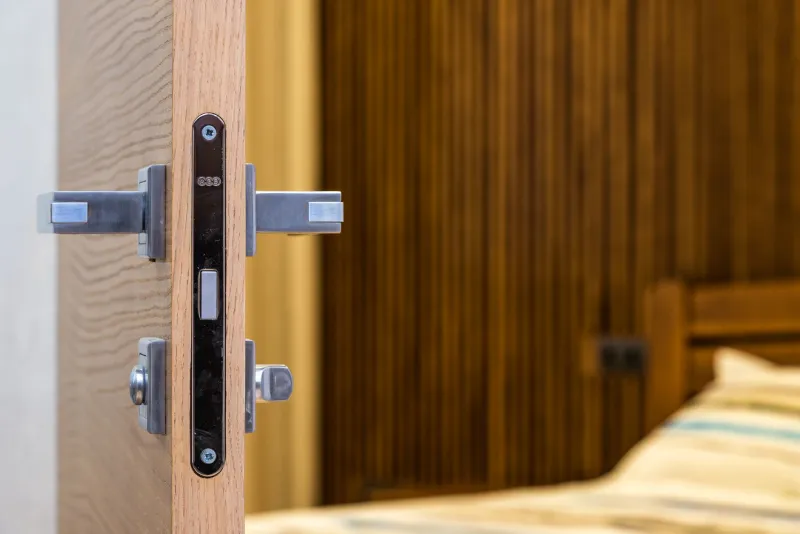
At some point in the 1980s or early 1990s, if you were a teenager in America, your bedroom was about as private as anywhere on earth. You could close the door and, short of a genuine emergency, the world stopped at that threshold. Your phone calls were your own — provided you'd managed to stretch the cord far enough under the door. Your journal lived in a drawer. Your thoughts were yours.
Nobody tracked where you went after school. Nobody reviewed who you'd been talking to. Your parents might have had rules and curfews and opinions about your friends, but between the hours of seven and ten on a school night, what you did in that room was genuinely, structurally private.
Today, that kind of privacy doesn't really exist for young people — and we've accepted its disappearance so gradually that most families haven't stopped to ask what it means.
The Room That Used to Be Yours
The teenage bedroom in mid-century and late-century America was a remarkable institution. It was where identity got assembled in private — music, posters, diaries, phone calls that lasted until someone picked up the extension in the kitchen. It was messy and personal and largely invisible to the adult world, and that invisibility served a developmental purpose.
Psychologists have long understood that adolescence requires a degree of separation from parental oversight. Not abandonment — structure and guidance matter enormously — but the specific experience of having thoughts and feelings and small experiments in selfhood that belong entirely to you. The closed bedroom door was a physical symbol of that psychological space.
You made mistakes in that room. You had conversations you'd later regret. You tried on versions of yourself that didn't fit and quietly put them back. None of it was recorded. None of it was monitored. It just happened, and then it was over, and you moved on slightly more formed than you were before.
The Monitoring Revolution Nobody Voted On
The transformation didn't arrive with a single product or a single moment. It crept in through a series of individually reasonable decisions.
First came cell phones, which meant parents could reach their kids anywhere. That seemed like pure safety, and mostly it was. Then came smartphones, which meant kids were carrying the internet in their pockets. That raised legitimate concerns. Then came the apps — Life360, Bark, Qustodio, Screen Time — that let parents track location in real time, review messages, set usage limits, and receive alerts when certain words appeared in texts.
Each step had a logic to it. The internet genuinely does contain things that are harmful to children. Predators are real. Cyberbullying is real. The anxiety parents feel about handing a twelve-year-old a portal to the entire world is completely understandable.
But somewhere in the accumulation of those individual decisions, something shifted. The bedroom stopped being a private space and became a monitored one. The closed door stopped meaning anything, because the surveillance was no longer physical — it was digital, ambient, and constant.
What Surveillance Does to Trust
Here's the thing about growing up that tends to get lost in conversations about parental monitoring: independence isn't just a reward for good behavior. It's a developmental requirement. Kids who are never allowed to make unsupervised decisions don't learn how to make decisions. Kids who know every text is being read learn to perform rather than to communicate honestly.
Researchers studying adolescent development have raised consistent concerns about over-monitoring. Not because parents shouldn't be involved in their children's lives — they absolutely should — but because there's a meaningful difference between being engaged and being surveilled. One builds a relationship. The other builds anxiety and, often, resentment.
There's also the question of what permanent digital records do to the experience of growing up. The teenager of 1988 who said something foolish to a friend on the phone said it once, to one person, and it dissolved into the air. The teenager of today sends a message that can be screenshotted, shared, reviewed by a parent's monitoring app, and stored indefinitely. The cost of ordinary adolescent awkwardness has gone up dramatically. There's no longer a clean slate at the end of the school year.
The Gap Between Safety and Control
It's worth being precise about what's actually being discussed here, because it's easy to strawman this in both directions. Parents who use monitoring apps are not villains. Many of them are responding to real dangers with tools that genuinely exist. And children do need guidance and, at younger ages, active oversight.
But there's a meaningful gap between safety and control, and American parenting culture has spent the last two decades drifting toward the control end of that spectrum in ways that often have more to do with parental anxiety than with actual risk. Location tracking a seventeen-year-old in a safe suburb isn't a safety measure. It's a comfort measure for the parent, and it comes at a cost to the kid's developing sense of autonomy.
The closed bedroom door was never about secrecy for its own sake. It was about the experience of having an inner life that was genuinely your own — one that you chose, in your own time, how much to share. That experience shaped generations of Americans into adults who understood privacy not as something to hide behind, but as something essential to selfhood.
We've handed our kids a world where that door is always slightly open, and we've told them it's for their own good. Maybe we should ask them how it feels.