Four Chairs, No Algorithm — The Barbershop Used to Run This Town
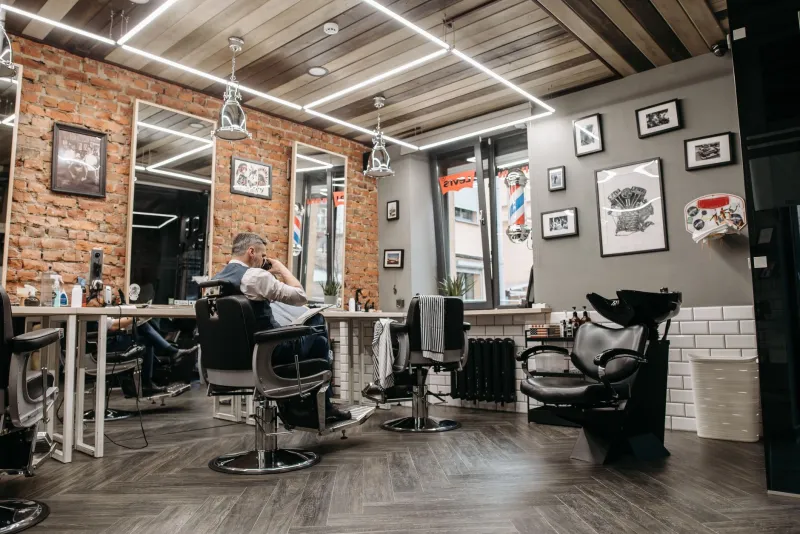
Walk into a barbershop in any mid-century American town on a Saturday morning and you'd find something remarkable: people disagreeing with each other, face to face, and somehow still getting along. The mayor's barber might be cutting the hair of the guy who hated the mayor's policies. The high school football coach would be three chairs down from the man who thought he ought to be fired. And they'd all be talking — about the city council vote, about who was selling their house, about whether the local team had any shot this season.
The barbershop wasn't just a place to get a trim. It was the town's operating system.
The Original Information Hub
Before anyone had a news feed, Americans had a chair. The neighborhood barbershop functioned as a living, breathing newspaper — one that talked back. Regulars came in weekly or biweekly, which meant the same faces cycled through constantly. Over months and years, those repeated encounters built something algorithms can't manufacture: actual familiarity.
Barbers became accidental archivists of community life. They knew who'd lost a job, who'd had a baby, which business was struggling, and which alderman had been spotted somewhere he shouldn't have been. Not because they were gossips — though some were — but because information flowed naturally through a space where people sat still, relaxed, and talked without an agenda.
In Black communities especially, the barbershop held an almost sacred civic role. During the civil rights era and long before it, Black-owned barbershops were among the few spaces where African American men could speak freely, organize politically, and process the weight of daily life without filtering themselves for a white audience. They were meeting rooms, debate halls, and support networks rolled into one. James Brown played on the radio. Arguments about Muhammad Ali echoed off the mirrors. And real plans — for voter registration drives, for community fundraisers, for collective action — were made between the buzz of clippers.
Opinions Built on Eye Contact
What made the barbershop different from every modern information platform wasn't the content. It was the format.
When you disagreed with someone in that chair, you could see their face. You could watch them get frustrated, calm down, consider your point, and maybe — just maybe — shift their position slightly. Or not. But the exchange happened in real time, between real people, with real consequences for the relationship. You had to live in the same town as that guy. You'd see him next month. That accountability shaped how people argued.
Compare that to the architecture of a Twitter thread or a Facebook comment section, where anonymity and distance strip away every social brake that once kept disagreement from turning into contempt. The barbershop had its share of heated moments, but it also had a barber who could shut things down with a look, and a room full of people who understood that the conversation would continue next week whether they liked it or not.
There's a reason political scientists talk about the erosion of "third places" — spaces that are neither home nor work — as a driver of civic decay. The barbershop was one of America's great third places. It asked nothing of you except that you show up and participate.
When Screens Took the Chair
The decline didn't happen overnight. Cable news started pulling people's political opinions into their living rooms in the 1980s and 1990s. Talk radio gave everyone a one-way megaphone. Then the internet arrived, and suddenly you could curate your information environment so precisely that you'd never have to hear a single opinion that challenged your own.
Barbershops didn't disappear, but their role changed. Many became more specialized, more appointment-based, more transactional. The walk-in culture — where you'd sit and wait for an hour and consider that wait time part of the social experience — gave way to scheduling apps and fifteen-minute slots. Some shops kept the spirit alive. But the broader cultural infrastructure that made the barbershop the center of civic life quietly moved elsewhere. Or rather, it fragmented into a thousand separate screens, each one showing a different version of reality to a different person sitting alone.
What We Actually Lost
Here's what's easy to miss when you think about the barbershop's decline: we didn't just lose a quaint ritual. We lost a mechanism for social cohesion that nobody thought to replace.
The barbershop forced cross-pollination. A retired steelworker and a young schoolteacher didn't seek each other out — they just ended up in adjacent chairs. A conservative small business owner and a union electrician didn't choose to debate tax policy — it just happened because they were both waiting for a cut and the topic came up. That accidental mixing of perspectives, repeated week after week across thousands of American towns, was doing something important. It was keeping people in the same conversation.
Now we self-sort digitally with terrifying efficiency. We follow people who think like us. We mute or block the ones who don't. Our algorithms learn our preferences and serve us content that confirms rather than challenges. And we wonder why it feels like the country is speaking two different languages.
The barbershop didn't solve America's divisions — it was born in a country with deep and ugly ones. But it forced people to sit with each other anyway. To share a physical space. To be, at minimum, civil enough to get through the next twenty minutes.
That's a low bar. But apparently, it was load-bearing.
The Lesson in the Lather
A few barbershops still hold the old tradition. You'll find them in neighborhoods where the pace of life hasn't fully surrendered to the digital clock — where someone still keeps a stack of old magazines, where the barber knows your name and your father's name, where the conversation spills from chair to waiting bench without missing a beat.
Walk into one and you'll feel something shift. Not nostalgia exactly. More like recognition. Like remembering what it felt like to actually be in the same room as the people you disagreed with — and finding out it wasn't as terrible as the internet told you it would be.