The Long Walk to an Answer — What We Gave Up When We Stopped Going to the Library
It started with a bike ride or a bus fare. Maybe a walk in the cold. You had a report due on the American Revolution, or the water cycle, or the life of Harriet Tubman, and the encyclopedia at home only had half the information you needed. So you went to the library.
You didn't go to browse. You went with a mission. And what happened next — the card catalogue, the reference desk, the smell of old paper, the slow accumulation of facts from multiple sources — was an education in itself, one that had nothing to do with the actual subject of your report.
The Card Catalogue Was a Puzzle Worth Solving
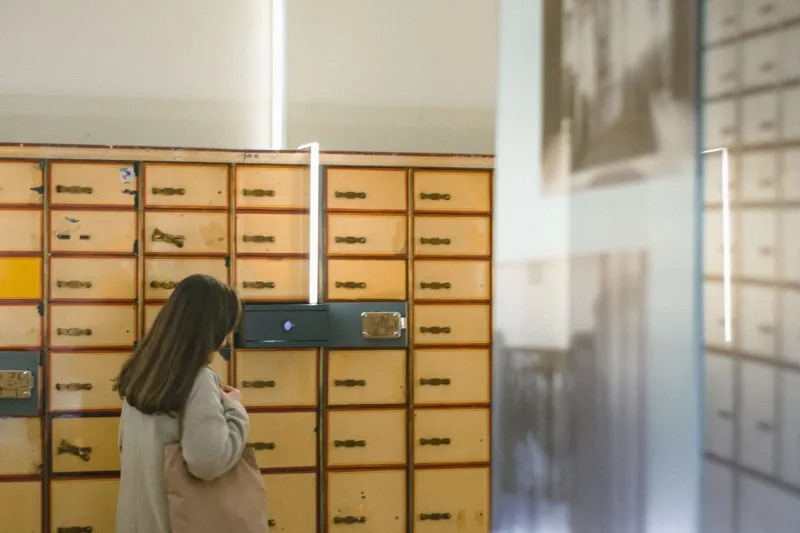
If you came of age before the mid-1990s, you know the card catalogue the way you know a childhood smell — immediately and completely. Rows of small wooden drawers, each one packed with index cards organized by subject, author, and title. Finding what you needed required understanding the system, which required asking someone or figuring it out yourself through trial and error.
That process had texture. You might search for one thing and stumble across something adjacent that turned out to be more useful. You'd flip through cards and notice titles that sparked curiosity. The path from question to answer was rarely straight, and the detours were often the most valuable part.
Then came the librarian. Not the shushing stereotype — the real ones. Reference librarians were guides who could look at your vague question, ask two clarifying follow-ups, and walk you directly to a shelf you never would have found on your own. They were human search engines with judgment. They didn't just retrieve information; they helped you figure out what you were actually looking for, which is a skill most people never develop if they've never had to articulate a question out loud to another person.
Research as a Physical Act
There's something that gets lost when we talk about pre-internet research: it was genuinely physical. You carried books to a table. You took notes by hand because you couldn't print everything. You had to decide, in real time, which information was worth writing down — a constant exercise in prioritization and judgment.
You also had to triangulate. One encyclopedia entry wasn't enough. A good teacher expected you to cite multiple sources, which meant pulling three or four books, cross-checking facts, and noticing when sources disagreed. That disagreement was valuable. It meant the answer wasn't a fixed object waiting to be retrieved — it was something constructed from evidence, which is the foundational idea behind critical thinking.
The friction was real, and it was meaningful. A student who spent two hours in the library pulling together a report on the Civil War knew that information in a way that a student who Googled the same topic in four minutes simply doesn't. Not because the library student was smarter, but because effort creates retention. Struggle creates understanding. The very inconvenience of the process was doing cognitive work.
What Instant Access Actually Costs
Nobody serious is arguing that Google is bad or that digital access to information is a net negative. The ability to look up anything, anywhere, in seconds has democratized knowledge in ways that are genuinely extraordinary. A kid in rural Mississippi now has access to the same information as a kid in Manhattan. That matters enormously.
But access and understanding are different things. And the way information arrives now — instantly, abundantly, already formatted for easy consumption — can short-circuit the process of actually learning it.
Studies on what researchers call "the Google effect" suggest that when people know they can easily look something up again, they're less likely to commit it to memory in the first place. Why retain what you can retrieve? It sounds efficient. But it means that knowledge increasingly lives in the device rather than in the person. And a person who can't remember anything without their phone isn't knowledgeable — they're connected.
There's also the credibility problem. The library's curated collection was a form of quality control. Books went through editors, fact-checkers, and publishers before they landed on those shelves. Not every book was accurate, but the system filtered out the worst of it. The internet has no such filter. A child searching for information on vaccines, climate change, or historical events is just as likely to land on misinformation as on peer-reviewed fact, and nothing in the design of a search results page makes that distinction obvious.
The Librarian We Stopped Asking
Here's a quiet casualty of the digital shift: the reference librarian is nearly extinct. Public library budgets have been cut for decades. Many branches operate with skeleton staffs. The role of the librarian as an active guide — someone who helps you navigate and evaluate information — has been replaced by a search bar that offers no guidance at all.
This isn't just a staffing issue. It represents a change in how we think about information itself. We've come to believe that access is the whole problem, that once you can reach the data, the work is done. But locating information and understanding it are two entirely separate skills. The librarian helped with both. The algorithm helps with only one.
The Struggle Was the Lesson
Ask anyone who grew up doing library research about the experience and they'll describe it with a warmth that's hard to explain. The quiet of the reading room. The satisfaction of finding exactly the right source after a long search. The sense that the knowledge had been earned rather than handed over.
That feeling wasn't sentimental. It was the brain encoding information through effort, the way it's always done best.
We built a system that removed the struggle. And we called it progress. In many ways, it is. But somewhere in that long walk to the library, in the hour spent at a wooden table piecing an answer together from scratch, something was happening that a four-second search simply cannot replicate.
The question isn't whether we should go back. We shouldn't, and we won't. The question is whether we understand what we traded away — and whether we're building anything to replace it.