A Letter Used to Cost You Something — And That Was the Point
In the spring of 1863, a Union soldier named Sullivan Ballou sat down in a military camp outside Washington and wrote a letter to his wife, Sarah. He had no way of knowing he would be dead within a week. But reading the letter now, you get the sense that he wrote it as though he might never have another chance — because he understood, in a way we've largely forgotten, that written words carry the full weight of the person who wrote them.
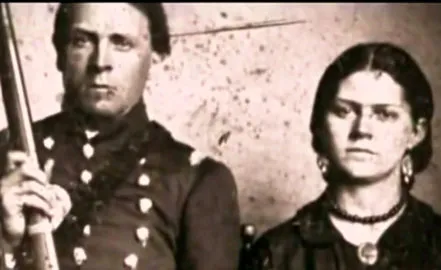 Photo: Sullivan Ballou, via historymysteryman.com
"I have no misgivings about, or lack of confidence in the cause in which I am engaged," he wrote, "and my courage does not halt or falter. I know how strongly American Civilization now leans upon the triumph of the Government, and how great a debt we owe to those who went before us through the blood and suffering of the Revolution."
That letter took days to reach Sarah. It was carried by hand, sorted in rough field conditions, transferred between postal riders. Every mile it traveled was a mile of intention. Nobody dashed it off between meetings.
The Physical Weight of Words
There's a ritual embedded in letter-writing that we don't talk about enough, because we've stopped doing it and therefore stopped noticing what we've lost.
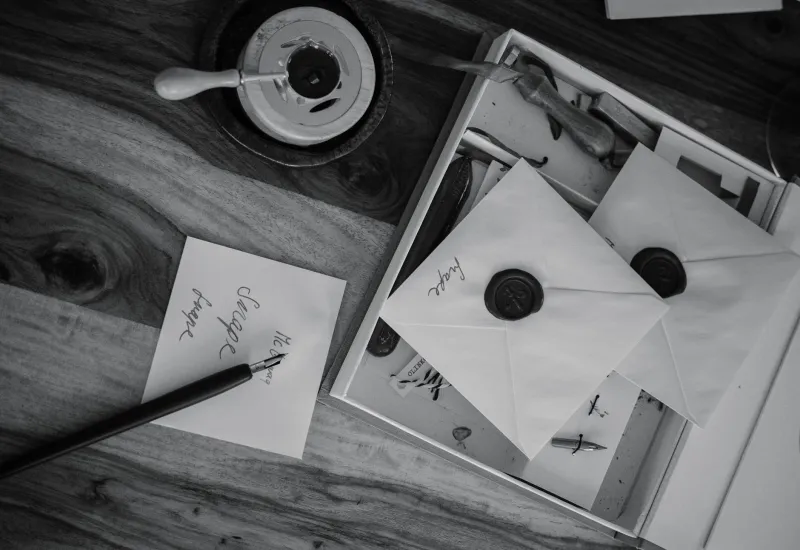
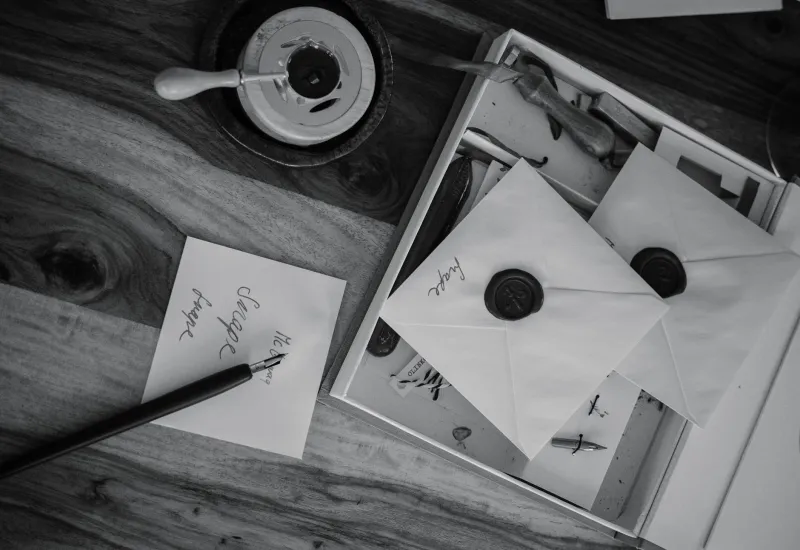
To write a letter, you had to decide to write a letter. That sounds obvious, but consider what it actually involved. You chose paper — plain or nice, depending on who you were writing to. You found a pen that worked. You sat somewhere quiet enough to think. You formed sentences in your head before committing them, because crossing things out and starting over was genuinely inconvenient. You thought about the person on the other end — what they needed to hear, what would make them laugh, what would worry them unnecessarily and should therefore be left out.
Then you sealed it, addressed it, stamped it, and mailed it. And then you waited. Sometimes for days. Sometimes for weeks, if the recipient was far away.
That waiting wasn't a flaw in the system. It was the system. The gap between sending and receiving created a kind of emotional pressure that shaped how people wrote. You couldn't fire off a frustration and expect a response in four minutes. If you wrote something harsh, you had time to regret it — but you couldn't take it back. So people were more careful. More considered. More honest in a deliberate way, rather than honest in the reflexive, unfiltered way that texts and tweets tend to produce.
What the Archives Tell Us
Historians who work with personal correspondence from the 18th and 19th centuries often remark on how articulate ordinary people were in their letters. Farmers. Factory workers. Soldiers with limited formal education. Their letters are grammatically careful, emotionally precise, and frequently beautiful in a plain-spoken way.
This wasn't because Americans were smarter then. It's because the medium demanded it. When you only wrote to someone a few times a year, each letter carried the full freight of everything you wanted to say. You couldn't afford to waste it on small talk that would be irrelevant by the time it arrived. So people got to the point — and the point was usually something real. Love. Grief. Fear. Pride. The texture of daily life observed with genuine attention.
The 20th century preserved this tradition longer than we sometimes remember. Through both World Wars, millions of Americans maintained correspondence that historians now mine for some of the most vivid firsthand accounts of those conflicts. Families separated by migration, by work, by circumstance kept relationships alive through the mail in ways that required genuine emotional investment.
Even into the 1970s and 1980s, letters were a standard part of adult life. Long-distance phone calls were expensive enough to be reserved for important occasions. If you had a friend who moved to another city, you wrote. If you had a grandmother in another state, you wrote. Birthday cards came with actual handwritten notes inside them, not just a signature.
The Collapse Happened Fast
Email arrived in mainstream American life in the mid-1990s and changed the economics of communication overnight. Suddenly distance cost nothing. Speed cost nothing. The friction that had made letters valuable — the time, the effort, the physical commitment — evaporated.
Text messaging accelerated the shift further. By the early 2000s, communication had fragmented into something closer to ambient noise than deliberate expression. The average American adult now sends and receives dozens of texts per day. Studies suggest the typical text message receives meaningful attention for roughly three seconds before the reader moves on.
Three seconds. Compare that to the letter Sullivan Ballou's wife kept for the rest of her life.
Social media added another layer of degradation. Now communication isn't even primarily between two people — it's a performance for an audience, shaped by the incentives of platforms that reward reaction over reflection. The idea of composing a thought carefully, with one specific person in mind, and sending it only to them, feels almost quaint.
The Pen Isn't Dead, Just Rare
There are people who still write letters. Handwritten correspondence has a small, devoted following — people who buy good stationery and fountain pens, who maintain pen-pal relationships across the country or the world, who send handwritten thank-you notes instead of a quick email. For them, the practice is partly nostalgic and partly principled: a refusal to let the fastest option also be the default option.
Therapists sometimes recommend handwriting as a tool for processing difficult emotions, noting that the slower pace of pen on paper produces a different quality of self-reflection than typing. Some couples write each other letters on anniversaries. Some parents write letters to their children to be opened at eighteen or twenty-one.
These gestures carry weight precisely because they're unusual now. A handwritten letter in your mailbox in 2024 is remarkable. It means someone stopped. Someone thought about you long enough to fill a page. Someone chose words that couldn't be deleted or edited after the fact.
That's what a letter always was. We just used to take it for granted.