The Stranger on the Porch Who Knew Everything About You — And Why You Invited Him In

Sometime in the spring of 1910, a man named Harold — or maybe Walter, or Frank — knocked on the door of a farmhouse in rural Ohio. He had a leather satchel, a government-issued form, and a list of questions that ranged from politely curious to surprisingly personal. He wanted to know how many people slept under that roof, what work they did, whether they owned or rented, and how long they'd lived there. And in most cases, the family invited him in.
That was the American census. Not a website. Not an algorithm. A person.
A Government That Showed Up in Person
The United States Census has been mandated by the Constitution since 1790 — one of the few federal activities baked directly into the founding document. For the first 150-plus years of that tradition, it was carried out almost entirely through face-to-face enumeration. The government hired hundreds of thousands of temporary workers — called enumerators — who fanned out across the country, walking door to door, farm to farm, tenement to tenement.
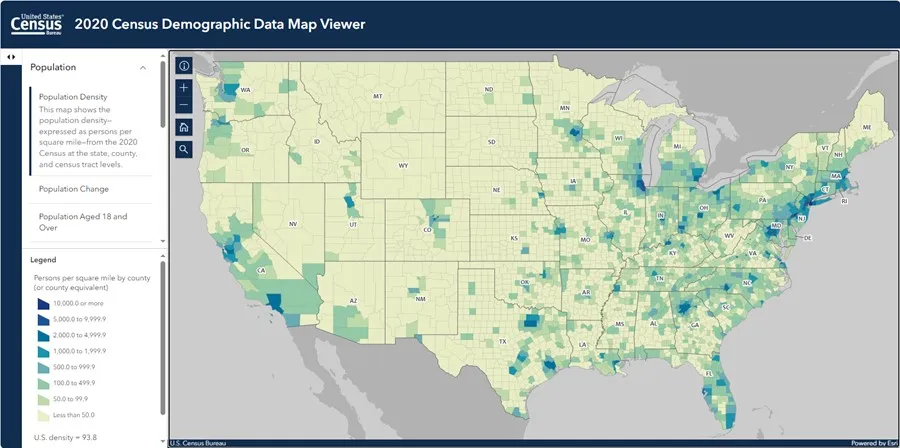 Photo: United States Census, via www.census.gov
These weren't bureaucratic automatons. They were neighbors, teachers, local businesspeople — people who often knew the communities they were counting. In small towns, the census taker might have gone to school with your father. In immigrant neighborhoods, the Bureau sometimes hired enumerators who spoke the local language. The whole enterprise was, by modern standards, almost charmingly low-tech: handwritten forms, ink-stained fingers, and a lot of coffee drunk at kitchen tables.
The questions themselves tell a story. Early censuses asked about livestock, the value of crops produced, the number of slaves held, and whether anyone in the household was "deaf, dumb, blind, insane, or idiotic" — the last category reflecting the brutal vocabulary of the era. Later versions probed income, education, military service, and immigration status. The government wasn't just counting heads. It was trying to understand the texture of American life.
What the Knock at the Door Actually Meant
There's something worth pausing on here. For generations of Americans, the census represented one of the only direct, personal interactions most households ever had with the federal government. Not a letter from a distant agency. Not a tax form mailed to a P.O. Box. A human being, standing on your porch, asking questions on behalf of the United States of America.
That interaction created a strange kind of civic intimacy. People answered questions they might never have discussed with their own relatives — debts, illnesses, the ages of elderly parents who'd stopped keeping track themselves. The enumerator was a confidential stranger, someone who would move on after an hour and take your private details back to Washington in a leather satchel. For many families, it was one of the few times they felt formally acknowledged by their own country.
In immigrant communities especially, being counted carried real weight. You existed. You mattered. The republic had sent someone specifically to write down your name.
The Long Goodbye to the Human Census
The shift away from personal enumeration didn't happen overnight. Mail-in questionnaires started supplementing door-to-door visits in the mid-twentieth century, and by the 1970 census, most households were asked to complete forms themselves and return them by post. Enumerators were still deployed — but now mainly to chase down non-respondents rather than to visit everyone.
By 2010, the internet had entered the picture. By 2020, the Census Bureau was actively pushing online completion, with phone and mail options as fallbacks. Door-to-door visits became the last resort rather than the default. The porch conversation, the cup of coffee, the handwritten name in a ledger — all of it quietly retired.
On one level, this is obviously progress. Online forms are cheaper, faster, and less invasive than sending a stranger to your home. Response rates improved in some demographics. The data became cleaner and easier to process.
But something else happened at the same time, something the Census Bureau didn't engineer but couldn't prevent: the idea of government data collection became both invisible and ubiquitous. Today, more information about American households is harvested every single hour by private companies than the federal government could have collected in a decade of door-to-door visits. Your phone knows your location. Your grocery store loyalty card knows your diet. Your browser history is a more detailed portrait of your anxieties, desires, and daily habits than any census enumerator could have assembled in a lifetime of kitchen table conversations.
Counted Without Knowing It
The profound irony of the modern moment is this: Americans in 1900 sometimes resisted the census because they didn't want a stranger knowing their business. Americans in 2024 hand over vastly more personal information every morning before breakfast, without a second thought, to corporations whose business models depend entirely on that data.
We traded the awkward but transparent human encounter for something frictionless and invisible — and in doing so, we lost the ability to clearly see when we're being counted, by whom, and for what purpose.
The old census enumerator knocked. You knew he was there. You could ask questions. You could choose what to say. The data collection happening around you right now makes no such announcement.
What Got Lost in the Efficiency
None of this is an argument for going back to handwritten ledgers or sending government employees to knock on 130 million doors every decade. The logistics alone would be impossible.
But it's worth remembering what the old system contained that the new one doesn't: a moment of mutual acknowledgment between a citizen and a representative of the nation they belonged to. A human being sitting across from another human being, saying — on behalf of the government — you count.
The census taker who stayed for coffee wasn't just collecting data. He was, in some small and imperfect way, making people feel seen. That function hasn't been replaced. It's just been quietly discontinued, along with the leather satchel and the ink-stained forms, while something far more comprehensive and far less personal took its place in the background — running silently, around the clock, without ever knocking first.