A Family of Four Used to Eat Out on a Whim. Now It Takes a Budget Meeting.
Somewhere between the drive-in window and the digital tip prompt, eating out stopped being a Tuesday night idea and became a line item in the family budget. It happened gradually enough that most people didn't notice the shift — until they did.
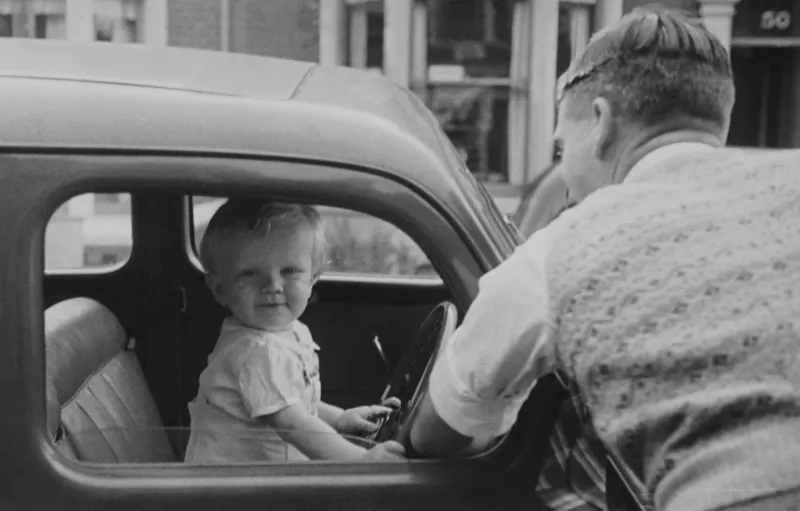
In the 1950s and '60s, taking the family out for dinner wasn't a special occasion. It was just dinner, somewhere that wasn't home. A father earning a factory wage could pull into a drive-in, order burgers, fries, and milkshakes for four, and hand over a few dollars without doing math in his head. The meal cost roughly what he made in an hour. Everyone ate. Nobody stressed.
That math doesn't exist anymore.
What a Night Out Actually Cost Then
At the peak of drive-in culture in the late 1950s, a family of four could eat a full meal — burgers, sides, drinks — for somewhere between three and five dollars. The federal minimum wage in 1955 was seventy-five cents an hour. A modest factory worker might earn a dollar fifty to two dollars an hour. That means a full family dinner cost the equivalent of two or three hours of work.
Step into a casual sit-down chain restaurant today — not a steakhouse, not a special occasion spot, just an Applebee's or a Chili's — and a family of four will routinely spend eighty to a hundred and twenty dollars once you factor in entrees, drinks, and the now-expected tip. The federal minimum wage sits at seven dollars and twenty-five cents. For a minimum wage worker, that dinner represents nearly a full day's pay before taxes.
Even for households earning the median US income, a casual dinner out has quietly become something people think twice about. That's a seismic cultural shift dressed up as inflation.
How the Experience Changed Too
It wasn't just the price. The entire architecture of dining out was rebuilt around you.
The drive-in era was built on speed, simplicity, and accessibility. Carhops brought food to your window. Menus were short. The whole experience was designed to be effortless and cheap. Diners — those gleaming chrome-and-neon institutions that dotted American highways — offered a full breakfast for under a dollar and a blue plate special that could fill a grown man for pocket change.
Then came the 1970s and '80s, and with them the rise of the corporate casual dining chain. These were restaurants engineered not just to feed people but to maximize revenue per table. Menus expanded. Alcohol programs were pushed hard because margins were better. Portion sizes grew — and so did prices. The experience became more elaborate, which gave restaurants cover to charge more.
By the 1990s, a "nice night out" for a family had already drifted upward in cost. But there was still a wide band of genuinely affordable options. Fast casual hadn't yet replaced the diner. Chain competition kept prices somewhat honest.
Then tipping culture quietly rewired everything.
The Tip That Became a Tax
For most of the twentieth century, a ten to fifteen percent tip was considered generous. It was a reward for good service, not an assumed baseline. Today, the standard expectation at a sit-down restaurant is eighteen to twenty-two percent — and digital payment systems now present tip prompts starting at twenty percent, nudging customers upward before they've had a chance to think.
On a $90 dinner bill, a twenty percent tip adds eighteen dollars. Add tax and you're well past a hundred and ten dollars for a meal that, in the previous generation, would have been a pleasant but unremarkable Tuesday night.
None of this is the server's fault. Tipping culture expanded partly because restaurants kept wages low and passed the compensation burden to customers. It's a structural problem wearing the costume of a social norm.
The Inflation Nobody Fully Accounts For
Food inflation is real and relentless, but it doesn't fully explain the gap. The cost of eating out has outpaced general inflation for decades. According to the Bureau of Labor Statistics, restaurant meal prices have risen significantly faster than grocery prices over the long term — meaning the gap between cooking at home and eating out has widened considerably.
 Photo: Bureau of Labor Statistics, via www.lignes-bureau.com
Ingredient costs, labor, rent in high-traffic locations, liability insurance, credit card processing fees — restaurants today operate under cost pressures that the drive-in owner of 1958 never imagined. Those costs get passed to the customer. That's economics, not villainy. But the cumulative effect is that a night out now requires a level of financial commitment that simply didn't exist before.
What We Actually Lost
The casualness is gone. That's the real thing.
When eating out was cheap enough to be spontaneous, it was woven into the rhythm of ordinary family life. It was where kids got to feel like the rules were slightly looser. Where couples had low-stakes evenings without needing a babysitter budget on top of a dinner budget. Where the decision to go out didn't require a mental calculation about whether it was "worth it."
Now, for many American families, dining out is reserved for birthdays, anniversaries, and occasions that justify the expense. It has become, in a quiet and almost unnoticed way, a luxury experience priced as a treat rather than a habit.
The drive-in is mostly gone. The diner is a novelty. And somewhere in the gap between a five-dollar family meal and a hundred-and-ten-dollar Tuesday, something ordinary became something to plan around.
That's not just an economic shift. It's a change in how families spend time together — and what they have to give up to do it.