America Already Had Amazon — It Was Just Printed on Newsprint and Arrived by Rail

Imagine living an hour's ride from the nearest town. The general store carries maybe three hundred items, all priced at whatever the owner decides is fair, because you have nowhere else to go. Your neighbors are in the same position. Everyone within fifty miles shops at the same place, pays the same inflated prices, and accepts that this is simply how commerce works for people who don't live near a city.
Then one day, a catalog arrives. Nearly six hundred pages. Tens of thousands of items. Prices printed right there in black and white, fixed and non-negotiable, available to anyone with a stamp and a mailing address.
Everything changes.
The Book That Rewired Rural America
Richard Sears launched his mail-order catalog in 1888, and by the early twentieth century it had grown into something that defies easy categorization. It wasn't just a shopping tool. It was an equalizer — a mechanism for delivering urban consumer access to the forty percent of Americans who lived in rural areas and had, until that point, been systematically overcharged for the privilege of having limited options.
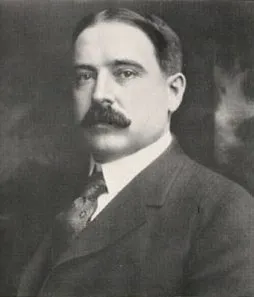 Photo: Richard Sears, via upload.wikimedia.org
At its peak, the Sears Roebuck catalog ran to over a thousand pages and offered everything from sewing needles to automobiles. You could order a wood-burning stove, a set of encyclopedias, a complete set of bedroom furniture, a rifle, a wedding dress, a bicycle, or an entire house. The kit homes — over 70,000 of them sold between 1908 and 1940 — arrived by railcar in numbered pieces, complete with blueprints and instructions. Families assembled them from scratch. Thousands still stand today.
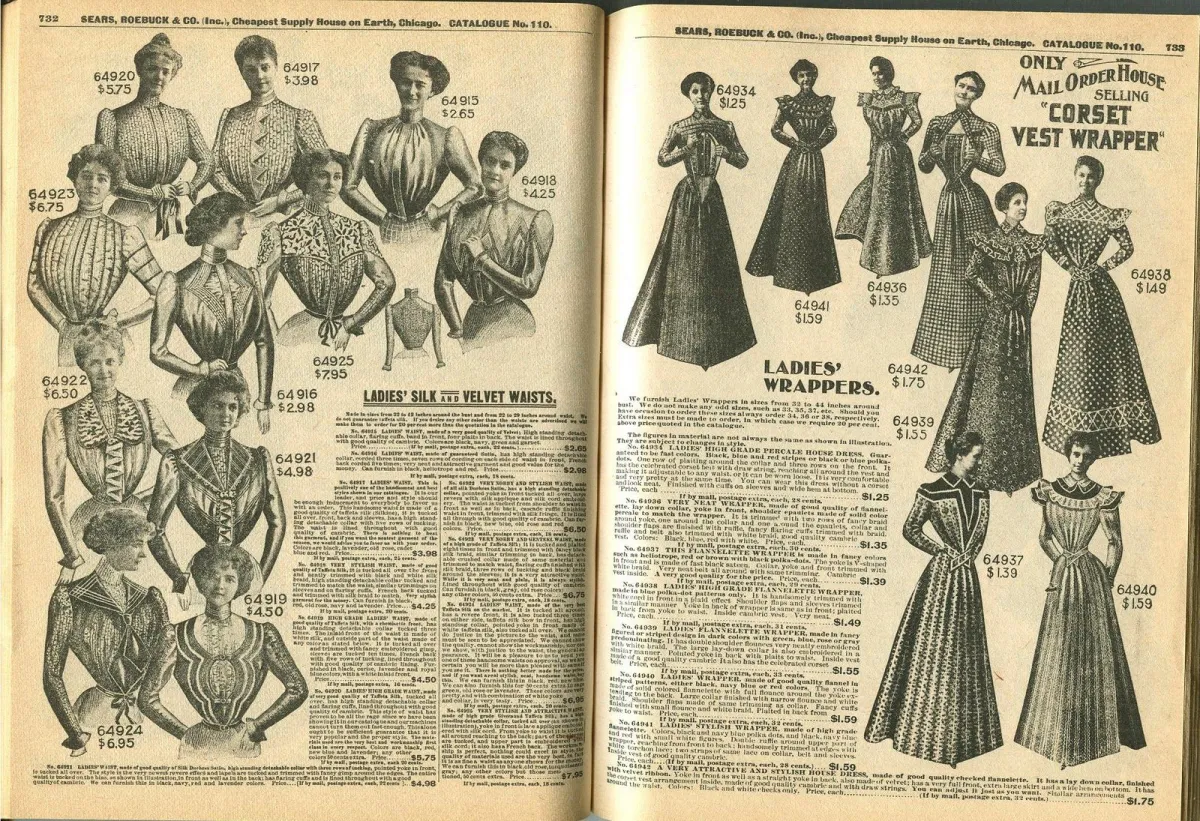 Photo: Sears Roebuck catalog, via i.pinimg.com
The catalog's prices were genuinely revolutionary. By cutting out the middleman and buying in extraordinary volume, Sears could offer goods at prices that local merchants simply couldn't match. The company's transparency about pricing — radical for its time — forced local retailers to compete on terms they'd never had to consider before. For rural and working-class Americans, it was the first time they'd experienced anything resembling a level playing field in consumer commerce.
Trust Delivered in a Brown Paper Package
What made the Sears catalog work wasn't just price or selection. It was trust — and trust was hard to earn in an era before consumer protections, before brand standards, before any reliable mechanism for holding a distant seller accountable.
Sears built that trust deliberately. Richard Sears's early marketing was almost comically personal, full of direct addresses to the reader, promises of satisfaction, and money-back guarantees at a time when such things were genuinely unusual. The company understood that it was asking Americans to do something psychologically novel: hand money to someone they'd never met, for a product they couldn't examine, from a place they'd never visited.
The guarantee removed the risk. And once the first package arrived — on time, as described, at the promised price — the relationship was established. Families became loyal Sears customers for generations. The catalog wasn't just a book they browsed. It was a trusted institution, as reliable as the post office that delivered it.
That emotional architecture should sound familiar to anyone who watched Amazon build its reputation in the late 1990s by obsessing over delivery reliability and making returns painless. The mechanics were different. The psychology was identical.
Two Revolutions, One Country
The parallels between Sears at its height and Amazon today are striking enough to feel like something more than coincidence — more like a recurring pattern in how American commerce periodically reinvents itself.
Both companies rose by solving the same core problem: access. Sears gave rural Americans access to goods they couldn't buy locally. Amazon gave everyone access to goods they couldn't easily find locally, at prices local retailers couldn't match. Both disrupted existing retail ecosystems so thoroughly that entire categories of business never recovered. Both were simultaneously celebrated as democratizing forces and criticized for hollowing out local commerce.
The small-town general store that couldn't compete with the Sears catalog closed, just as the independent hardware store and the local bookshop have closed under Amazon's shadow. The mechanisms differ — railroads versus fulfillment centers, printed pages versus search algorithms — but the structural story is the same.
What's different is scale and speed. The Sears disruption unfolded over decades, giving communities some time to adapt. Amazon's has compressed a similar transformation into roughly fifteen years, leaving far less room for adjustment.
The Catalog's Quiet Casualties
For all its genuine benefits, the Sears catalog also quietly accelerated the decline of something valuable: the local merchant economy. The hardware store owner, the dry goods seller, the local tailor — these weren't just retailers. They were community anchors, employers, and informal social institutions. When the catalog made them economically irrelevant, it didn't just change where people shopped. It changed the texture of small-town life.
This is the part of the story that tends to get lost in the celebration of consumer access and competitive pricing. Both revolutions — the catalog and the algorithm — delivered real material benefits to ordinary Americans, especially those with limited means. And both extracted a social cost that doesn't show up in any transaction record.
We've Lived This Story Before
There's something clarifying about recognizing that Amazon is not the first time America has torn up its retail landscape in the name of access and efficiency. We did it before, with newsprint and rail freight and a company based in Chicago that understood, a hundred and thirty years ago, that geography shouldn't determine what you can afford to buy.
The Sears catalog is largely forgotten now — a curiosity, a piece of Americana, something your grandparents might have mentioned. But it changed the material conditions of American life as profoundly as any technology of its era. It put a cast-iron stove in a farmhouse kitchen that could never have afforded one otherwise. It put a new suit on a man who'd been wearing the same one for five years. It put a house — an actual house — on a piece of land that had never had one.
Amazon is doing something similar, at a scale that would have been unimaginable to Richard Sears. But the revolution he started, flipping through pages by lamplight in a farmhouse in 1910, was arguably the more profound one — because it was the first time. And nothing is ever quite as powerful as the first time you realize the world doesn't have to work the way you thought it did.