When Grief Belonged to Everyone — The Three-Day Funeral America Left Behind
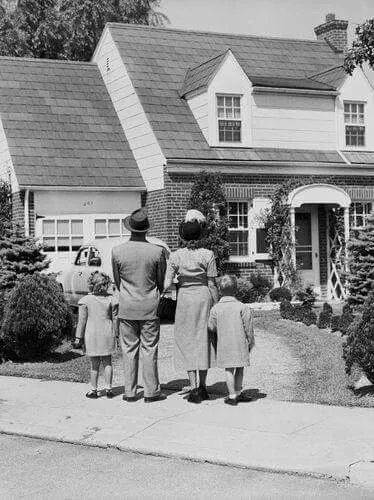
Photo: vintage American funeral gathering neighbors community 1950s black and white, via i.pinimg.com
When someone died in a small American town in the 1950s, the news traveled fast. Not through a notification or a post — through the actual human network of a community that knew itself. By that evening, there were casseroles on the porch. By the next morning, neighbors were sitting in the front room. By the day after that, half the county had come through the door.
The funeral wasn't an event you attended. It was something you lived inside for several days — a communal, messy, sometimes exhausting ritual that forced everyone to stop and acknowledge what had happened. Grief was public property. Loss was shared.
That version of mourning is almost entirely gone now. And the country is probably worse for losing it.
The Front Room Vigil
For much of American history, the dead were brought home. Literally. The body would be laid out in the front parlor — which is actually why that room was called a parlor, from the French parler, to speak, since it was where formal conversation and solemn occasions took place. Neighbors came in shifts. Women from the church organized food. Men stood on the porch and talked quietly. Children were not shielded from the proceedings; they were present, because death was understood to be part of life rather than a logistical problem to be managed offsite.
The visitation period could stretch across two or three days. There was no particular agenda. People arrived when they could, stayed as long as felt right, told stories about the deceased, cried openly, laughed at memories, and ate enormous quantities of food that other people had cooked. Grief moved through the room in waves, and nobody expected it to be tidy.
The funeral itself — the service, the burial — was the conclusion of a process that had already been underway for days. By the time the coffin was lowered, the community had already done a significant amount of the emotional work together.
The Rise of the Funeral Industry
The shift began in the late nineteenth century and accelerated through the twentieth. Embalming, which became widespread after the Civil War, made it possible to delay burial and move the body outside the home. Funeral parlors — businesses specifically designed to handle the dead — began absorbing the rituals that families had previously managed themselves.
By the mid-twentieth century, the American funeral industry had become a sophisticated commercial enterprise, and the home vigil had been almost entirely replaced by the funeral home visitation. The emotional texture of the experience changed with the setting. A funeral home, however tastefully decorated, is a professional space. It has hours of operation. It has staff who manage the flow of visitors. It has a schedule.
Jessica Mitford's 1963 book The American Way of Death was a sharp critique of how the industry had commercialized mourning, turning grief into a transaction and the bereaved into customers. She wasn't wrong. But what she was documenting was only the beginning of a longer trend toward the professionalization — and ultimately the privatization — of loss.
Grief Gets Smaller
By the 1990s and 2000s, the multi-day funeral had become the exception rather than the rule in most parts of the country. Services shortened. Attendance shrank. The reception after the burial — once a sprawling, hours-long gathering — became a brief stop at a church hall or a restaurant reserved for the afternoon.
Part of this reflects genuine changes in how Americans live. Families scatter across the country. Taking three days away from work to mourn a neighbor you knew reasonably well is no longer something most employers accommodate or most schedules allow. Communities themselves have become more anonymous — in many American suburbs, you might not know the name of the person who died two streets over, let alone feel the pull to show up at their family's door with a pound cake.
But part of it also reflects a cultural retreat from visible grief. Somewhere in the late twentieth century, American culture got more uncomfortable with public mourning. The stiff upper lip became aspirational. "Celebrating a life" replaced grieving a death — a framing that's not without value, but that can also function as a way to skip the harder, uglier parts of loss.
What Social Media Replaced — and What It Didn't
When someone dies today, the announcement often goes up on Facebook or Instagram before the family has finished making phone calls. The comment section fills with hearts and memories. People who haven't spoken to the deceased in twenty years post throwback photos. It's not nothing — there's genuine feeling in those posts, and for people who are geographically distant, it may be the only way to participate.
But it's a thin substitute for presence. For the casserole on the porch. For sitting in a room with someone who is actively devastated and not saying anything particularly useful, but being there anyway. Social media grief is grief performed at a safe distance, which is exactly the kind of grief that doesn't do the work that grief is supposed to do.
The Gathering That Held a Town Together
Funerals, in their older form, were one of the primary mechanisms by which communities renewed their sense of themselves. Showing up for a neighbor's loss was a statement about what the community valued and who it included. It was also, practically speaking, a way of maintaining the social fabric — of keeping people connected across the ordinary distances that daily life creates.
When that gathering shrinks to a two-hour service attended by immediate family and a handful of close friends, something more than a ritual disappears. The community loses one of its few remaining occasions to simply be together, to acknowledge shared mortality, and to remind itself that it exists as something more than a collection of individual households.
The front parlor is gone. The casseroles are gone. The three days of sitting together in grief are gone.
What replaced them is quieter, more private, and considerably more alone.