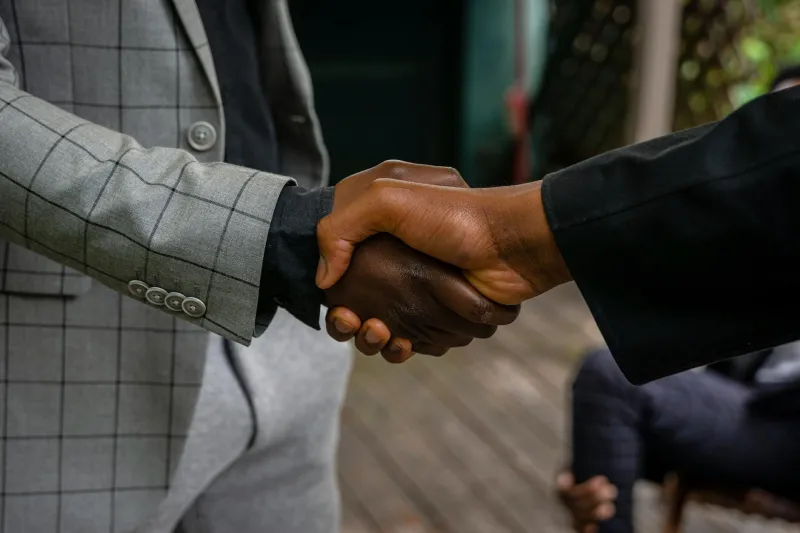
In 1952, Sam Walton opened his first five-and-dime store in Bentonville, Arkansas. The lease? A handshake with his landlord and a verbal promise to pay $150 a month. No background checks, no credit reports, no 40-page rental agreement filled with liability clauses. Just two men looking each other in the eye and making a deal.
That same year, across small-town America, farmers bought tractors with a nod, contractors built houses on a promise, and banks loaned money based on knowing a man's character rather than his credit score. The handshake deal wasn't just common — it was the backbone of American commerce.
Today, that world seems as foreign as horse-drawn carriages.
The Era When Character Was Currency
In post-war America, business ran on what economists now call "social capital" — the web of relationships, trust, and shared values that made complex transactions possible without complex paperwork. Your reputation in the community wasn't just important; it was everything.
Consider the typical small-town hardware store of the 1950s. The owner knew his customers by name, their families' histories, and their financial situations. When a farmer needed supplies for spring planting but wouldn't have cash until harvest, the deal was simple: take what you need, pay when you can. No credit checks, no interest rates, no collection agencies. Just trust built on years of relationship.
This system worked because everyone lived in the same small ecosystem. The farmer who stiffed the hardware store would face social consequences that went far beyond a damaged credit rating. He'd lose standing in his church, his social clubs, his entire community network. In a world where reputation mattered more than documentation, breaking your word meant breaking your life.
The Lawyers Moved In
Somewhere between the Eisenhower administration and today's smartphone era, everything changed. The handshake deal didn't just decline — it virtually disappeared, replaced by an avalanche of legal documentation that would have baffled our grandparents.
Try volunteering to coach your kid's Little League team today. You'll need to sign liability waivers, background check authorizations, code of conduct agreements, and insurance forms. Want to help at a school bake sale? More paperwork. Planning to hire a neighborhood teenager to mow your lawn? Better check if you need worker's compensation insurance.
The numbers tell the story. In 1970, there were roughly 355,000 lawyers in America. By 2020, that number had tripled to over one million. We now have more lawyers per capita than any country in human history. What were they all doing? Writing contracts for things that used to require nothing more than a firm handshake.
What We Gained and What We Lost
To be fair, our ancestors' trust-based system had serious flaws. Women and minorities were often excluded from these networks of mutual trust. Small communities could be insular and prejudiced. And when trust broke down, people had little legal recourse.
Today's contract-heavy world offers real protections. Clear terms prevent misunderstandings. Written agreements protect the vulnerable from exploitation. Legal frameworks provide recourse when deals go bad. These aren't small benefits — they're fundamental improvements in fairness and justice.
But something profound was lost in translation. Harvard sociologist Robert Putnam has documented the steady decline in what he calls "social trust" — Americans' willingness to believe that others will generally do the right thing. In 1964, 77% of Americans agreed that "most people can be trusted." By 2012, that number had fallen to just 35%.
The Paperwork Society
Walk into any business today and you'll encounter the physical manifestation of our trust deficit. Terms and conditions that no one reads but everyone must sign. Liability waivers for activities that previous generations considered normal parts of life. Privacy policies longer than the Constitution.
The average American now "agrees" to dozens of legal contracts every month, most without reading a single word. We've created a society where legal protection is everywhere, but genuine trust has become a luxury good — something that exists mainly in small, exclusive circles of family and close friends.
Consider the modern real estate transaction. What once required a handshake now generates hundreds of pages of documentation: purchase agreements, inspection reports, title searches, mortgage applications, insurance policies, and disclosure forms covering everything from lead paint to earthquake risks. The transaction is undoubtedly more transparent and legally sound. But it's also completely impersonal — a series of legal procedures rather than a human agreement.
The Price of Protection
This transformation came with costs that extend far beyond lawyer fees. When every interaction requires legal documentation, spontaneous cooperation becomes nearly impossible. When every activity requires insurance and liability waivers, community organizations struggle under administrative burdens. When trust must be legally mandated rather than socially earned, the very fabric of community relationships begins to fray.
Small businesses feel this most acutely. The corner grocery store that once offered informal credit to struggling families now operates under regulations that make such personal arrangements legally risky. The local contractor who built relationships through word-of-mouth recommendations now competes with national chains that win through legal teams and standardized contracts.
What We Can't Get Back
There's no returning to the handshake deal era, nor should we want to. Our complex, diverse, mobile society requires legal frameworks that small-town social pressure simply can't provide. We've gained essential protections for workers, consumers, and vulnerable populations.
But recognizing what we've lost might help us find new ways to build the trust that makes communities thrive. Some organizations are experimenting with "relationship-based" business models that prioritize long-term trust over short-term legal protection. Community-supported agriculture, local investment cooperatives, and neighborhood tool libraries all represent attempts to rebuild the social capital that once made handshake deals possible.
The handshake deal built America not because it was legally perfect, but because it was built on something money can't buy: the belief that your word was your bond, and your reputation was worth more than any contract. In our rush to protect ourselves from every possible risk, we may have forgotten that some of life's most valuable transactions — friendship, community, trust — can't be reduced to terms and conditions.
Sam Walton's handshake lease lasted forty years. Today's Walmart operates under contracts that would fill a small library. Both approaches built successful businesses, but only one built the kind of community where neighbors knew each other's names and promises still meant something.