When Your Pharmacist Was Your Friend — Before Robots Started Counting Your Pills
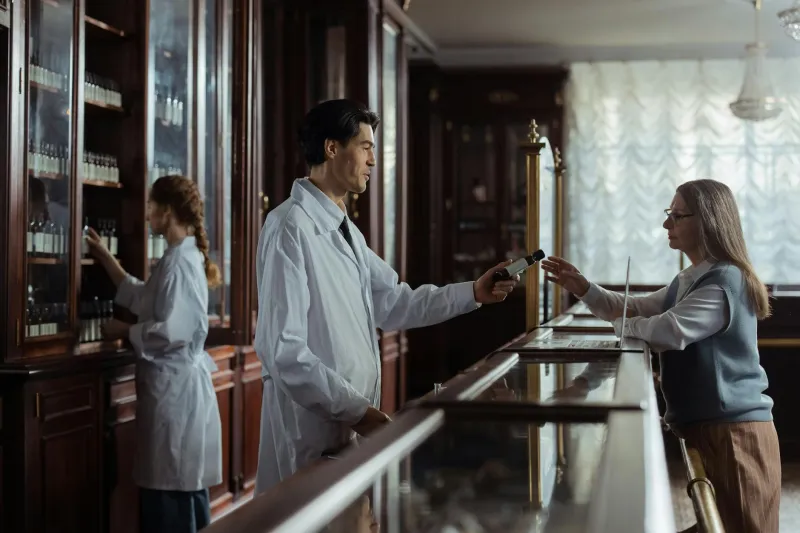
The Corner Drugstore That Knew Everything
Walk into any pharmacy today, and you'll likely encounter a scene that would puzzle your grandparents. Customers tap screens to check in, automated dispensing machines whir behind bulletproof glass, and pharmacists — if you see them at all — are buried behind computer monitors, racing to fill quotas that would have seemed impossible decades ago.
But rewind to 1960, and the American pharmacy looked entirely different. The local drugstore wasn't just a place to pick up prescriptions — it was a community institution where the pharmacist knew not just your name, but your father's heart condition, your mother's arthritis, and which of your kids was allergic to penicillin.
When Medicine Was Personal
Back then, pharmacists were true healthcare partners. They mixed compounds by hand, crushing tablets and measuring powders on brass scales that had been calibrated by touch and experience. If you had a question about a medication, you didn't get a computer printout — you got a conversation with someone who had probably filled prescriptions for three generations of your family.
Take Harold Peterson, who ran Peterson's Pharmacy in downtown Minneapolis from 1952 to 1987. He kept handwritten index cards for every customer, noting not just their prescriptions but their concerns, side effects, and even personal details that might affect their health. When Mrs. Johnson mentioned she was having trouble sleeping, Harold knew it might be related to the blood pressure medication she'd started the month before. When teenage Bobby came in with acne, Harold remembered that Bobby's older brother had responded well to a particular treatment.
This wasn't unusual — it was standard practice. Pharmacists were trained not just in chemistry but in customer relationships. They were often the most accessible healthcare professionals in small towns, sometimes the only medical expert available after hours or on weekends.
The Efficiency Revolution
Fast forward to today, and the numbers tell a stark story. The average pharmacy in 1960 filled about 50 prescriptions per day. Modern chain pharmacies process 300 to 500 daily — sometimes more. What made this possible wasn't just population growth; it was a complete transformation of how medications are prepared, dispensed, and managed.
Automated dispensing systems now count pills with mechanical precision. Robotic arms select bottles from vast inventories. Computer systems cross-reference drug interactions instantly, catching potential problems that might have required hours of manual research in the past. Insurance verification, once a phone call that could take 20 minutes, now happens in seconds through electronic networks.
The modern pharmacy technician can process more prescriptions in an hour than Harold Peterson handled in a week. Efficiency has soared, wait times have plummeted, and the risk of human error in basic tasks like pill counting has virtually disappeared.
What the Algorithm Can't Remember
But something fundamental was lost in translation. Today's pharmacy systems know your prescription history with digital precision, but they don't know that you're caring for an aging parent, recently lost your job, or that you've been too embarrassed to ask about the side effects you've been experiencing.
The algorithm can instantly flag a dangerous drug interaction, but it can't notice that you look worried or remember that you mentioned financial stress last month. It can't offer the kind of informal health counseling that neighborhood pharmacists once provided as naturally as breathing.
Consider the difference in a simple interaction. In 1965, picking up blood pressure medication might have led to a five-minute conversation about how you were feeling, whether the medication was working, and gentle advice about diet and exercise. Today, the same transaction involves scanning a barcode, confirming your address on a screen, and receiving a computer-generated information sheet that most people immediately discard.
The Chain Store Takeover
The transformation wasn't just technological — it was structural. Independent pharmacies, which made up 95% of all pharmacies in 1960, now account for less than 35%. Chain pharmacies and big-box retailers have standardized the experience, prioritizing efficiency and cost control over personal relationships.
This shift reflected broader changes in American healthcare and retail. As insurance companies demanded lower costs and faster service, the cozy inefficiencies of the corner drugstore became unsustainable. Pharmacists, once small business owners deeply rooted in their communities, became employees of corporations with profit margins to maintain.
The Price of Progress
Today's pharmacy system is undeniably more efficient, more accurate in many ways, and more accessible. Prescription drugs are cheaper, drug interactions are caught more reliably, and you can pick up medications at dozens of locations instead of being tied to one neighborhood store.
But we've also lost something irreplaceable: the human element that made healthcare feel less clinical and more caring. The pharmacist who knew your story has been replaced by systems that know your data. The conversation has been replaced by the printout.
Looking Back, Moving Forward
As we navigate an increasingly automated healthcare landscape, it's worth remembering what the old corner drugstore represented: the idea that healthcare could be both professional and personal, that efficiency and empathy didn't have to be mutually exclusive.
The next time you tap that screen to check in for your prescription, take a moment to appreciate both what we've gained and what we've given up. Progress isn't always just about moving forward — sometimes it's about remembering what worked before, and asking whether we can find ways to bring the best of both worlds together.