When Main Street's Drugstore Was Your Living Room — Before CVS Turned Medicine Into Fast Food
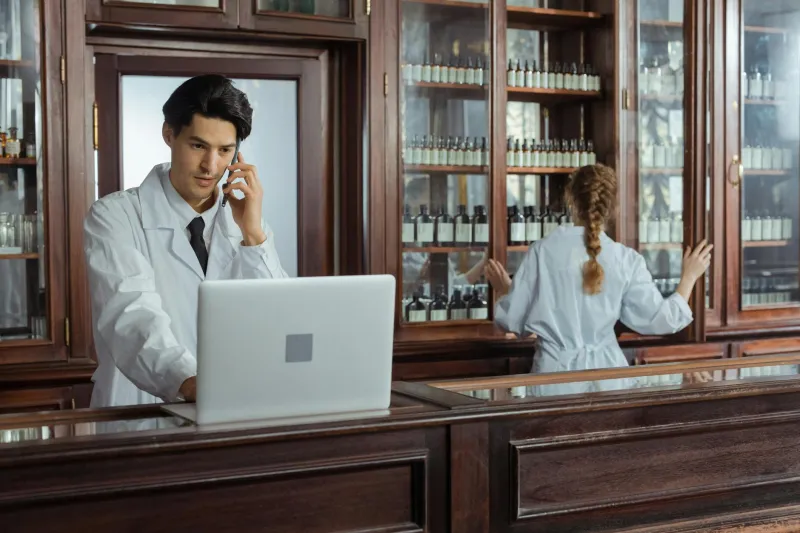
The Lunch Counter Revolution That Started at Your Pharmacy
Picture this: It's 1952, and you're walking into Kowalski's Drugs on Elm Street. The bell above the door chimes as you enter, and Mr. Kowalski looks up from behind the prescription counter, already knowing you're here for your mother's arthritis medication. But first, you slide onto one of the red vinyl stools at the lunch counter, where Mrs. Patterson is finishing her tuna melt and sharing the latest about her daughter's engagement.
This wasn't just a pharmacy visit — it was a social event. And for most of the 20th century, this scene played out in thousands of American towns every single day.
More Than Pills: The Everything Store Before Amazon
The independent drugstore of yesteryear defied easy categorization. Sure, it filled prescriptions, but it also served as the town's unofficial community center, newspaper stand, and restaurant all rolled into one. These establishments typically featured soda fountains that had been fixtures since the 1880s, originally designed to mask the bitter taste of medicinal tonics with sweet syrups.
By the 1940s and 50s, these lunch counters had evolved into full-service diners. You could order a grilled cheese sandwich, a chocolate phosphate, and pick up your blood pressure medication all in one stop. The pharmacist knew not just your prescription history, but your family's health concerns, your job troubles, and whether your kids were doing well in school.
"My grandfather's drugstore had twelve stools at the counter," recalls Maria Gonzalez, whose family ran Gonzalez Pharmacy in San Antonio until 1987. "People would come in for coffee at 7 AM before work, housewives would meet for lunch at noon, and teenagers would hang out after school ordering cherry Cokes. The pharmacy was just one part of what we did."
The Personal Touch That Algorithms Can't Replicate
The pharmacist of the 1950s operated more like a family doctor than today's pill-dispensing specialists. They mixed compounds by hand, offered medical advice, and maintained detailed handwritten records of every customer's health history. When Mrs. Johnson came in complaining of headaches, the pharmacist might remember that she'd mentioned stress about her husband's new job and suggest a different approach than just reaching for the aspirin.
This personal knowledge extended beyond medical matters. Pharmacists knew which customers were struggling financially and might quietly extend credit. They understood family dynamics — who could be trusted to pick up medication for elderly relatives, whose teenagers might be experimenting with substances that required a watchful eye.
The Chain Store Invasion
The transformation began in the 1960s when national chains like Walgreens, Eckerd, and later CVS started aggressive expansion campaigns. These corporations promised something the corner drugstore couldn't: efficiency, standardization, and lower prices through bulk purchasing power.
The math was compelling for consumers. Chain stores could offer wider selections, longer hours, and competitive pricing. They introduced innovations like drive-through pharmacies, computerized prescription tracking, and 24-hour locations that independent stores simply couldn't match.
But something intangible was lost in translation. The lunch counters disappeared first — they took up valuable retail space and required additional staff. The personal relationships followed, replaced by rotating pharmacists who might see hundreds of customers per day and had little time for conversation beyond the legally required medication counseling.
What We Traded Away for Convenience
Today's pharmacy experience prioritizes speed and efficiency. You can refill prescriptions through mobile apps, receive text notifications when orders are ready, and complete transactions without meaningful human interaction. For many people, especially those managing chronic conditions, this represents genuine progress.
Yet something profound was lost when the corner drugstore vanished. These establishments served as crucial "third places" — spaces outside of home and work where community bonds formed naturally. The lunch counter conversations helped neighbors stay connected, provided informal support networks for elderly residents, and created the kind of social capital that sociologists say is essential for healthy communities.
"When my mom's drugstore closed in 1995, it wasn't just a business shutting down," explains David Chen, whose mother ran Chen's Pharmacy in Portland, Oregon for thirty years. "It was like the town lost its living room. People didn't have anywhere to just bump into each other and talk anymore."
The Unexpected Revival
Interestingly, some communities are rediscovering the value of the old model. Independent pharmacies are making a comeback in certain areas, often emphasizing the personal service and community connections that chains abandoned. These new establishments might not have lunch counters, but they're experimenting with coffee bars, health clinics, and community event spaces.
Some entrepreneurs are even recreating the full experience. In Nashville, the Pharmacy Burger Parlor & Beer Garden occupies a restored 1950s drugstore, complete with original lunch counter and pharmacy fixtures. While it's now a restaurant rather than an actual pharmacy, it serves as a reminder of what we once had.
The Price of Progress
The story of America's drugstores illustrates a broader pattern in how we've organized modern life. We've optimized for efficiency, convenience, and cost-effectiveness — goals that have undeniably improved many aspects of daily living. But we've also systematically eliminated the informal gathering places where communities once strengthened their social fabric.
The next time you're standing in line at CVS, waiting for a prescription while scrolling through your phone, consider what your grandparents experienced in that same situation. They might have waited longer, paid a bit more, and dealt with less convenient hours. But they also left knowing their neighbors a little better, feeling more connected to their community, and confident that someone who genuinely cared about their wellbeing was looking out for them.
Progress isn't always a straight line forward. Sometimes it's worth asking what we left behind — and whether some of those old ideas might be worth bringing back.