When Doctors Carried Black Bags to Your Bedside — Before Medicine Moved to Assembly Lines
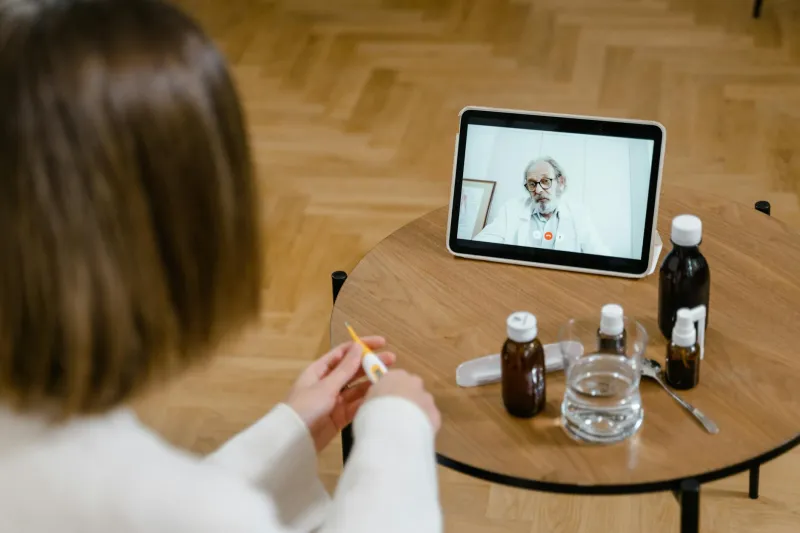
The Doctor Will See You Now — In Your Living Room
Picture this: It's 1952, and little Tommy has a fever that won't break. Instead of bundling him into the car for a trip to the clinic, Mom simply calls Dr. Henderson. Within an hour, the familiar black sedan pulls into the driveway. Dr. Henderson climbs the front steps with his worn leather bag, settles into the chair beside Tommy's bed, and spends forty minutes checking his patient, talking with the family, and maybe sharing a cup of coffee before writing out a prescription.
This wasn't a luxury service for the wealthy — it was simply how American medicine worked. In 1940, doctors made roughly 40% of their patient visits in homes. By 1980, that number had plummeted to just 1%. Today, house calls represent less than 0.1% of all medical encounters.
The Unhurried Art of Bedside Manner
Dr. Henderson knew that Tommy's father worked double shifts at the steel mill and that his mother had struggled with anxiety since her own father passed. He understood the family's financial situation, their fears, and their medical history not from a computer screen, but from years of personal relationship. When Tommy developed that fever, Dr. Henderson could factor in everything from the family's stress levels to their ability to afford follow-up care.
The average house call in the 1950s lasted 30 to 45 minutes. The doctor had time to observe how the patient moved in their natural environment, to notice if the home was too cold or if there were signs of broader family health issues. Medicine was practiced with context, not just symptoms.
Compare that to today's reality: the average primary care appointment lasts just 18 minutes, with doctors spending more time looking at computer screens than at their patients. Studies show physicians interrupt patients within 11 seconds of them beginning to describe their symptoms.
When Your Doctor Was Your Neighbor
The house-call era created a different kind of medical professional. These doctors were integral parts of their communities, attending the same churches, shopping at the same stores, and often living just blocks from their patients. They delivered babies, treated grandparents, and sometimes even treated family pets in a pinch.
Dr. Sarah Williams, who practiced in rural Kansas from 1948 to 1982, once recalled: "I knew which families couldn't afford medicine, which children were being raised by overwhelmed single mothers, and which elderly patients were too proud to admit they weren't eating properly. You can't get that kind of insight from a fifteen-minute office visit."
This intimacy had practical benefits. House-call doctors caught problems early because they understood their patients' normal patterns. They could spot depression, domestic issues, or declining cognitive function because they saw people in their natural environment, not just when they were sick enough to seek help.
The Economics That Changed Everything
So what killed the house call? The answer lies in a perfect storm of economic and technological changes that transformed medicine from a personal service into an industrial process.
First came insurance. As employer-provided health insurance expanded after World War II, the payment model shifted from direct patient-doctor relationships to complex insurance billing. It became far more profitable for doctors to see multiple patients per hour in a controlled office environment than to spend time traveling between homes.
Medical technology played a role too. As diagnostic equipment became more sophisticated and expensive, it made sense to centralize it in medical facilities. Why carry a basic stethoscope and thermometer when you could have patients come to X-ray machines, lab equipment, and specialized testing devices?
The rise of medical specialization further fragmented care. Instead of one doctor handling everything from broken bones to heart conditions, patients began seeing different specialists for different problems. This made house calls logistically impossible — no single doctor could carry the expertise or equipment needed for comprehensive care.
What We Lost in Translation
Today's medical system excels at acute care, complex procedures, and life-saving interventions that would have been impossible in Dr. Henderson's era. But something fundamental was lost in the translation from bedside to clinic.
Modern patients often feel like numbers in a system rather than individuals with unique circumstances. The average American sees 18.7 different doctors throughout their lifetime, making continuous, relationship-based care nearly impossible. Electronic health records, designed to improve communication, often create barriers between doctors and patients as physicians focus on data entry rather than eye contact.
The mental health implications are significant. Studies show that patients who have longer-term relationships with their doctors have better health outcomes, higher satisfaction rates, and lower healthcare costs overall. Yet the current system actively works against these relationships through insurance networks, high patient volumes, and time pressures.
The Quiet Revolution in Reverse
Interestingly, house calls haven't disappeared entirely — they've just become a luxury service. Concierge medicine practices now charge thousands of dollars annually for the kind of personalized, unhurried care that was once standard. Some tech companies are experimenting with on-demand house calls, but these services typically cost $200-400 per visit.
A few pioneering healthcare systems are rediscovering the value of home-based care, particularly for elderly patients and those with chronic conditions. Studies show that house calls can reduce emergency room visits by up to 38% and decrease hospital readmissions significantly.
The Prescription We Can't Fill
There's no simple path back to 1952. Modern medicine's complexity, legal requirements, and economic realities make a full return to the house-call era impossible. But the contrast reveals something important about what we've prioritized in healthcare.
We've gained incredible technological capabilities and life-saving treatments. We've lost the unhurried conversation, the personal relationship, and the holistic understanding of patients as whole people rather than collections of symptoms.
The next time you're sitting in a sterile waiting room, checking your watch and wondering if your doctor will remember your name, think about Tommy and Dr. Henderson. Sometimes progress means moving forward. Sometimes it means remembering what we left behind.