The Neighborhood Kids Vanished at Dusk. Now They're Scheduled Until Bedtime. What Happened to Childhood?
The Summer of Unsupervised Time
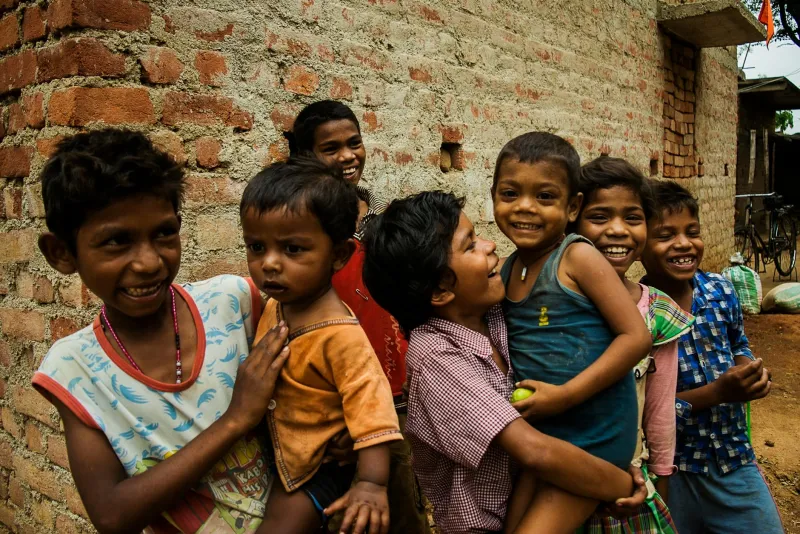
Take yourself back to 1978. School ends in June. A child—let's say she's eight years old—walks out the front door after breakfast and doesn't return until dinner. Maybe not even then. She might be at the creek two blocks over, catching crawdads. She might be in the Hendersons' backyard, climbing the oak tree. She might be at the park with a group of kids whose names she might not even know, inventing a game that has no rules and no endpoint, just the organic evolution of play.
Her parents don't know exactly where she is. They don't have a phone number for the creek. There's no app tracking her location. If she's hungry, she finds a neighbor's house. If she gets hurt, she figures out how to get home. The implicit agreement was simple: come back before dark, and don't do anything that would get the police called.
This wasn't neglect. This was childhood.
Fast forward to 2024. An eight-year-old's summer looks radically different. Monday is soccer camp (9 a.m. to noon). Tuesday is piano lessons (3 to 4 p.m.) and a scheduled playdate (4:30 to 6 p.m.). Wednesday is chess club. Thursday is tennis. Friday is a birthday party—the location, duration, and activities all predetermined and communicated via text to the parent group.
Downtime is rare. Unstructured time is rarer still. And the idea of a child simply disappearing for hours with no contact? That would trigger immediate concern, possibly a call to police.
Somewhere between those two eras, American childhood underwent a complete metamorphosis.
The Safety Revolution
The shift didn't happen by accident. It was driven by several converging forces, the most powerful being an explosion of awareness about child danger.
In the 1980s and 90s, child abduction and abuse became national obsessions. Missing children appeared on milk cartons. Cable news ran documentaries about predators. Parenting magazines published increasingly alarming statistics about every conceivable threat. The cultural message was clear: the world was more dangerous than anyone had previously imagined, and responsible parents needed to be hypervigilant.
Some of this awareness was warranted. Child safety advocates had, in many cases, been ignored for decades. The problem is that perception and reality diverged sharply. Crime rates—including violent crime against children—actually declined throughout the 1990s and 2000s, even as parental anxiety about safety increased dramatically.
But perception shapes behavior. If you believe the world is fundamentally dangerous, you supervise accordingly. You don't let your child walk to school alone. You don't let her play in the front yard unsupervised. You certainly don't let her disappear into the neighborhood for eight hours.
Some parents call this protective. Others call it something different.
The Competitive Pressure Multiplier
Safety concerns alone don't fully explain the shift. There's another force at work: competitive parenting.
Starting in the 1990s, a new parenting philosophy emerged—call it intensive parenting or helicopter parenting. The idea was that children's outcomes (college admissions, career success, life satisfaction) were directly correlated to parental investment. More activities meant more opportunities. More supervision meant better outcomes. More involvement meant success.
The pressure intensified as schools began requiring activities and experiences on college applications. A child who'd spent her childhood roaming the neighborhood now looked, on paper, like a child who'd wasted time. A child with a résumé full of camps, clubs, volunteer work, and leadership positions looked ambitious and accomplished.
So parents began filling every gap. Not out of malice, but out of a genuine belief that this is what good parenting looked like. It's not enough to let your child play soccer; she needs to play on a competitive travel team. It's not enough to read books; she needs to attend writing workshops. It's not enough to have friends; she needs to attend structured social activities that maximize networking.
The result is a generation of kids whose schedules look like middle managers' calendars.
The Technology Accelerant
Then came the smartphones and location tracking. Suddenly, supervision became continuous.
Parents could now know where their child was at all times. Some apps send alerts when a child leaves a designated zone. Others allow parents to monitor social media in real time. Many families use shared calendars so everyone knows everyone else's location and schedule.
This technology was marketed as safety and peace of mind. And in some contexts, it genuinely is. But it also means that a child has almost no unsupervised space left—not in the physical world and not in the digital one.
The old rule was: come home before dark. The new rule is: send a location pin constantly.
What the Research Actually Says
So what does this shift mean for children? The honest answer is: we're not entirely sure yet, because we're living through it.
But there are some patterns emerging from developmental psychology research, and they're complicated.
On one hand, there's no evidence that constant supervision and structured activities have produced happier, more successful children. If anything, the opposite: rates of childhood anxiety and depression have increased substantially since the 1990s. Adolescent suicide rates have risen. Stress-related disorders are more common. Children report feeling overscheduled and exhausted.
On the other hand, some research suggests that unsupervised play—the kind kids used to get—develops crucial skills: risk assessment, conflict resolution, independence, creativity, resilience. When children spend all their time in structured, adult-supervised environments, they miss the chance to develop those capacities.
A landmark study by researchers at Boston College found that children who had regular unsupervised outdoor play reported higher levels of well-being and lower levels of anxiety than their constantly-supervised peers. They also demonstrated better problem-solving skills and more creativity.
Another research project, led by psychologist Peter Gray, argues that the decline in unsupervised play has contributed to increases in mental health problems in children and young adults. Kids, he argues, need time to be bored, to figure things out on their own, to fail without an adult immediately intervening.
The Paradox of Protection
Here's the deepest paradox: we've created an environment designed to protect children from danger, but it may be damaging them in subtler ways.
A child who's never been lost doesn't know how to find her way. A child who's never had to resolve a conflict with peers without adult mediation doesn't know how to navigate social complexity. A child who's never been bored hasn't learned how to entertain herself or develop her own interests. A child who's never experienced minor failure hasn't built resilience.
And perhaps most importantly: a child who's always being watched, always being scheduled, always being optimized for future success, doesn't get to just be a child. She doesn't get to have experiences that matter only because she chose them, not because they'll look good on a college application.
The kids of the 1970s and 80s weren't safer—statistically, they were less safe. But they developed capacities that today's kids often lack. They learned independence. They learned to entertain themselves. They learned that the world was manageable, even when adults weren't around.
The Middle Ground We Haven't Found
The challenge now is whether we can find a middle path. Not the free-range childhood of the 70s—the world has changed, and some concerns are legitimate. But also not the total supervision and scheduling of the current moment.
Some parents are attempting this: letting kids walk to school, allowing unstructured time, resisting the urge to overschedule. But they're swimming against a powerful cultural current. Neighbors sometimes call the police on children playing unsupervised. Schools and camps require constant communication with parents. Peer pressure—the sense that other kids are doing more, attending more activities—is relentless.
Breaking out of the intensive parenting model feels risky. What if your child falls behind? What if something happens?
But what if the real cost isn't the small risk of something happening, but the certainty of something not happening: the chance to become the kind of person who can figure things out, who can play without direction, who can be bored and survive it?
That's the trade we've made, and we're only beginning to understand the price.