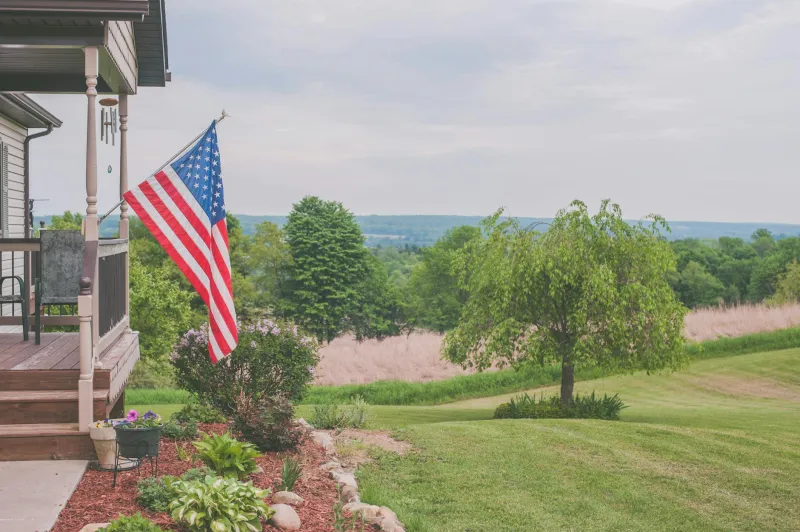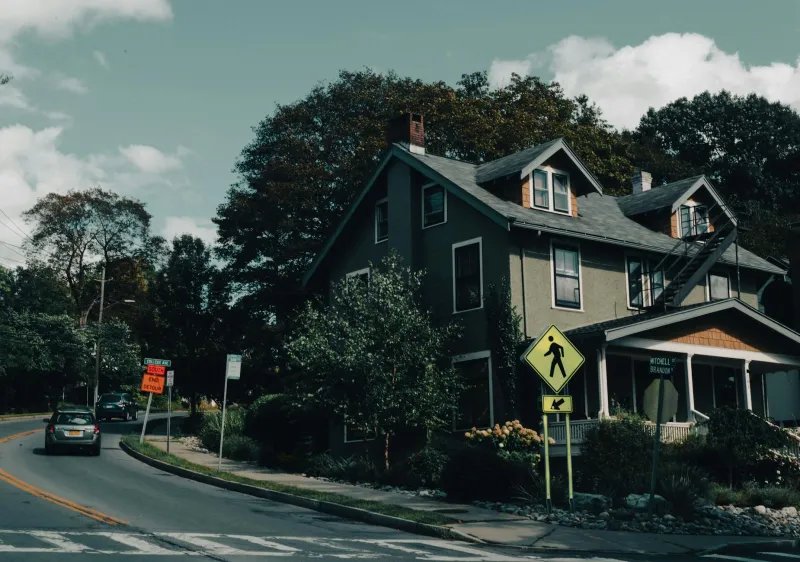
Jim Patterson knew every kid on Elm Street by name. Not just their first names — he knew the Kowalski twins, little Danny Murphy, the three Johnson girls, and the Peterson boy who was always climbing Mrs. Henderson's apple tree. When school let out in 1973, these weren't just names to him. They were his responsibility.
That's how neighborhoods worked then. Adults watched out for all the children, not just their own. Mrs. Chen would call your mother if she saw you misbehaving three blocks away. Mr. Rodriguez would drive you home if your bike broke down. The Andersons would invite you in for lemonade if you looked thirsty.
Today, Jim's son Mike lives on that same street. He's been there for eight years and couldn't tell you his next-door neighbor's last name.
When Streets Were Social Networks
In the post-war suburban boom, neighborhoods functioned as extended families. Front porches served as observation decks and conversation starters. Children played elaborate games of hide-and-seek that spanned multiple yards. Adults borrowed cups of sugar, shared garden tools, and kept informal tabs on each other's comings and goings.
The average American in 1970 could name 19 neighbors. They knew who worked where, whose kids were in which grades, and who needed help when illness struck. Block parties weren't organized events — they were spontaneous gatherings that happened when someone fired up a grill and word spread down the street.
This wasn't nostalgia or selective memory. It was a different way of organizing daily life. People spent time outside their homes, in spaces where interaction was natural and expected. Children roamed freely between houses, creating bonds that often lasted lifetimes. Adults developed what sociologists call "weak ties" — relationships that weren't intimate friendships but provided crucial social support.
The Great Retreat Indoors
Somewhere between the Carter presidency and today's smartphone era, Americans began what urban planner James Howard Kunstler calls "the great retreat indoors." We didn't just move inside our homes — we moved inside our cars, our private spaces, our digital bubbles.
The transformation happened gradually, then suddenly. Air conditioning meant people spent less time on front porches during summer evenings. Television provided entertainment that didn't require leaving the house. Two-career families meant less time for casual neighborhood socializing. Suburban design shifted from front porches to back decks, from sidewalks to cul-de-sacs, from walking to driving.
By 2000, the average American could name just 8 neighbors. Today, that number has dropped to fewer than 5. In many suburban neighborhoods, residents can live next door to each other for years without ever having a real conversation.
The Architecture of Isolation
Modern suburban design actively discourages the kind of casual interaction that built neighborhood communities. Consider the evolution of the American home's relationship to the street.
In Jim Patterson's 1973 neighborhood, houses sat close to sidewalks, with prominent front porches and large windows facing the street. Garages were tucked behind houses or off to the side. Children played in front yards where parents could easily supervise from porches or through windows.
Today's suburban homes present a very different face to their neighbors. Garages dominate front facades, often wider than the house itself. Front porches, if they exist at all, are small and decorative rather than functional. Windows face inward toward private back yards rather than outward toward the community.
The result is what architect Andrés Duany calls "snout houses" — homes that present garage doors to the street like closed mouths, revealing nothing about the life inside. Residents drive directly into these garage mouths and disappear, never needing to encounter their neighbors at all.
The Ring Doorbell Revolution
Nothing symbolizes our retreat from neighborhood community like the Ring doorbell. These devices, now installed on millions of American homes, represent a fundamental shift in how we think about our neighbors — from potential friends to potential threats.
The marketing for home security systems reveals this transformation. Advertisements don't show neighbors helping neighbors; they show strangers as dangers to be monitored, recorded, and reported. The front door, once a symbol of hospitality, has become a checkpoint equipped with cameras and motion sensors.
Neighborhood social media groups, often organized around these security systems, focus primarily on reporting suspicious activity rather than building community connections. The same technology that could help neighbors coordinate block parties is instead used to share grainy footage of "suspicious" people walking down public sidewalks.
What the Research Reveals
Social scientists have documented the collapse of neighborhood social capital with depressing precision. Harvard's Robert Putnam found that Americans are 35% less likely to visit with neighbors than they were in the 1970s. The General Social Survey shows that the percentage of Americans who say they "often" interact with neighbors has fallen from 30% in 1974 to just 19% today.
The decline affects all types of neighborhoods, but it's most pronounced in newer suburban developments. Residents of neighborhoods built after 1990 report knowing significantly fewer neighbors than those in older communities, even controlling for factors like income and education.
Age makes a difference too, but not in the way you might expect. While older Americans do report knowing more neighbors, the bigger factor is how long people have lived in the same place. The most socially connected neighborhoods are those with low turnover, where people have had time to build relationships.
The Cost of Stranger Danger
The retreat from neighborhood community came with costs that extend far beyond mere loneliness. When adults don't know each other, children lose what developmental psychologists call "social redundancy" — multiple adults who know their names, recognize their faces, and feel some responsibility for their welfare.
This has practical consequences. In the 1970s, a lost child could knock on any door and expect help. Today, parents teach children that most adults are strangers to be avoided. The informal network of community supervision that once allowed kids to roam freely has been replaced by formal supervision — scheduled activities, organized sports, and constant parental oversight.
The economic costs are substantial too. Neighbors who know and trust each other share resources naturally — borrowing tools, watching each other's homes during vacations, carpooling to events. When these informal networks disappear, families must purchase services they once received for free from their community.
The Digital Paradox
Ironically, technology designed to connect us has often had the opposite effect on neighborhood relationships. Social media allows us to maintain hundreds of distant relationships while ignoring the people who live 20 feet away. Dating apps help us find compatible partners across the city while we remain strangers to compatible neighbors.
Neighborhood apps like Nextdoor promised to rebuild local connections, but often devolved into platforms for complaint and suspicion rather than community building. Instead of organizing block parties, residents use these platforms to report noise violations and argue about parking.
The smartphone completed our retreat into private worlds. Walking through neighborhoods today, you're more likely to see people staring at screens than talking to neighbors. Even children, once the natural ambassadors of neighborhood connection, now move between air-conditioned cars and houses without lingering in the spaces where casual encounters happen.
What We've Lost
The collapse of neighborhood social networks represents more than just a loss of friendliness — it's the erosion of a crucial layer of civil society. Neighborhoods once served as training grounds for democracy, places where people learned to cooperate with diverse groups, resolve conflicts, and work toward common goals.
These skills don't develop automatically. They require practice in low-stakes environments where people must get along despite different backgrounds, opinions, and lifestyles. When we lose neighborhood connections, we lose one of the primary spaces where Americans learn to be citizens rather than just consumers.
The psychological costs are equally significant. Researchers have found that people with strong local social networks report higher levels of life satisfaction, better physical health, and greater resilience during crises. The COVID-19 pandemic revealed these benefits starkly — neighborhoods with strong social connections adapted better to lockdowns and provided more mutual support.
The New Neighborhood Pioneers
Not every community has surrendered to isolation. Across America, some neighborhoods are experimenting with ways to rebuild the social connections that previous generations took for granted.
Some communities have redesigned their physical spaces to encourage interaction — converting unused lots into community gardens, organizing regular street closures for block parties, or creating "little free libraries" that serve as conversation starters. Others focus on regular social events — progressive dinners, walking groups, or neighborhood watch programs that emphasize community building over security.
The most successful efforts often start small and personal. One neighbor begins hosting regular front-porch happy hours. Another organizes a tool-sharing program. A third starts a neighborhood newsletter featuring resident profiles and local history.
The Choice We Still Have
The story of American neighborhoods doesn't have to end with Ring doorbells and garage-door isolation. The infrastructure for community still exists — sidewalks, front yards, shared spaces where people could connect if they chose to.
Rebuilding neighborhood community requires intentional effort in a way that would have puzzled previous generations. It means choosing to spend time outside, initiating conversations with strangers, and prioritizing local relationships over distant ones.
Mike Patterson still lives on Elm Street, in the house where his father once knew every child's name. His own kids spend most of their time indoors, connected to friends across town through screens rather than neighbors across the street through shared adventures.
But sometimes, on summer evenings, Mike sits on his front porch — the same porch where his father once surveyed his informal kingdom. Occasionally, a neighbor walking a dog will stop to chat. Kids on bikes will wave as they pass. For brief moments, the old neighborhood magic flickers back to life.
It's still there, waiting. The question is whether we'll remember why it mattered enough to make the effort to bring it back.