Your Grocery Store Used to Stock 3,000 Items. Now It Has 30,000. Are You Actually Happier?
When Choice Was Simple
Walk into a typical American grocery store in 1950 and you'd find yourself in a space that would feel claustrophobic by today's standards. The average store was maybe 6,000 square feet—roughly the size of a modest house. The produce section had whatever was in season. Winter meant root vegetables and canned goods. Summer meant fresh tomatoes and corn. The selection wasn't curated by a team of produce managers; it was determined by the calendar.
Cereal? There were maybe five varieties. Bread? White, wheat, or rye. Olive oil? You didn't buy olive oil at the grocery store; that was a specialty item from an Italian market, if you could find one. Yogurt? Not unless you lived near a Greek community. Cheese came in two varieties: American and cheddar.
The store was organized simply. Aisles were narrow. Checkout was fast. You knew what you wanted because there wasn't much to want. A typical shopping trip took 30 minutes. You bought what you needed. You went home.
The genius of this system was its simplicity. Choice was limited, but so was decision-making. You didn't stand in the cereal aisle for ten minutes contemplating options. You grabbed the Cheerios or the Corn Flakes, and you moved on.
The Explosion
By the 1980s, the supermarket had begun to transform. New refrigeration technology made it possible to stock a wider variety of perishables. Globalization meant access to foods from other countries. Marketing departments realized that variety could be a selling point. Stores competed by expanding selection.
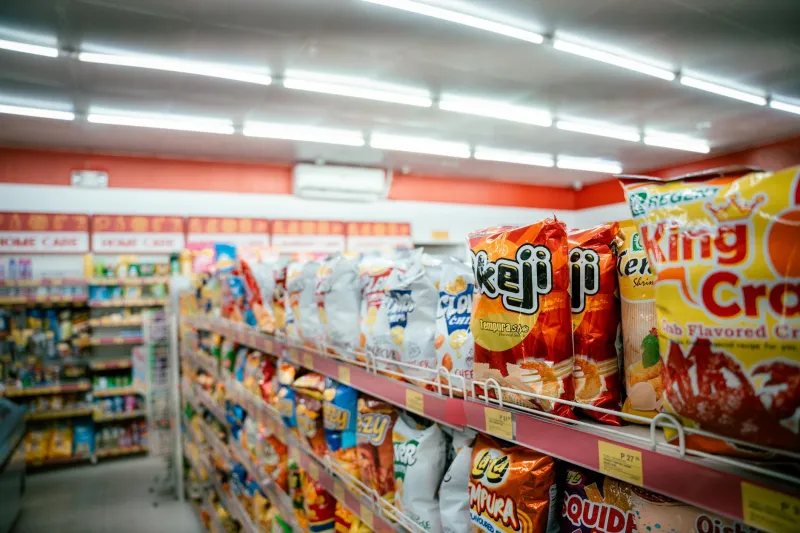
A 1985 study found that the average American supermarket carried about 9,000 products. By the 1990s, that number had jumped to 15,000. By 2010, it was 30,000 to 50,000 items in a large supermarket. Today, the largest supermarkets carry closer to 120,000 SKUs (stock-keeping units), if you count every brand, size, and flavor variation.
The produce section alone now carries items that would have been unthinkable in 1950: dragon fruit, baby bok choy, seven varieties of mushrooms, three types of asparagus. The cereal aisle has exploded to include hundreds of options. Olive oil? There are 200 varieties. Yogurt? An entire section dedicated to Greek, Icelandic, plant-based, and traditional varieties, each in multiple flavors and fat percentages.
The cheese section is its own universe. Pasta? You could spend an hour comparing brands, shapes, and specialty varieties. Bread? A full bakery section with dozens of options, plus an entire aisle of packaged bread products.
On one level, this is objectively miraculous. A person can now eat foods from every corner of the world without leaving their hometown. Dietary restrictions that would have been impossible to accommodate in 1950 are now routine. The variety available to a modern American grocery shopper would have seemed like science fiction to someone from the 1950s.
The Paradox of Plenty
But here's the problem: we're not actually happier.
In fact, the research suggests we're more anxious.
A famous study by psychologists Barry Schwartz and Sheena Iyengar explored what happens when people are faced with too much choice. In one experiment, they set up a jam tasting at a grocery store. One display offered 6 varieties of jam; another offered 24 varieties. More people stopped at the larger display—choice is attractive. But fewer people actually bought jam from the larger selection. When faced with 24 options, people experienced what's called "choice paralysis." The decision became too difficult. The cognitive load was too high. It was easier to buy nothing.
When they did buy from the smaller selection, they were more satisfied with their purchase. They didn't second-guess themselves wondering if they'd made the wrong choice.
The same pattern repeats across consumer behavior. More options correlate with higher anxiety, more regret, and less satisfaction—even when the person ultimately makes a purchase. This is called the "paradox of choice," and it's been documented across dozens of studies.
Apply this to the modern grocery store: you stand in the yogurt section facing 50 options. You're trying to optimize: low sugar? High protein? Probiotics? Organic? You compare prices. You read labels. You wonder if you're making the right choice. You buy something, but you're not entirely satisfied—there's always a nagging sense that one of the other 49 options might have been better.
This isn't a trivial psychological experience. It's exhausting. And it happens dozens of times during a single shopping trip.
The Hidden Cost of Abundance
There's another cost that's less visible but equally real: the increase in spending.
Research from the University of Pennsylvania found that when people are presented with more options, they tend to spend more money, even if the additional spending doesn't increase their satisfaction. The mechanism is simple: more options mean more things to consider, and more things to consider means higher likelihood of impulse purchases.
Marketers and retailers know this. The explosion in product variety isn't accidental; it's strategic. Supermarkets stock multiple brands of the same basic product because the research shows that more options increase total spending. They're not trying to make your life better; they're trying to maximize their profit per square foot of shelf space.
Consider the cereal aisle. In 1950, you had five options. Now you have hundreds. But you can only eat one box of cereal. The additional 295 options don't make you happier; they make you spend more time deciding and potentially spend more money on premium or specialty brands.
The same logic applies across the store. The olive oil section has exploded not because consumers demanded 200 varieties of olive oil, but because retailers discovered that variety increases spending. Same with pasta, cheese, bread, snacks—across the board, proliferating options correlate with increased consumer spending.
So the modern supermarket is, in a sense, engineered to make you spend more money while feeling less satisfied with your purchases.
The Tyranny of Optimization
There's also a psychological shift that's happened alongside the expansion of choice: the rise of what we might call "optimization culture."
When there were five cereals, the question was simple: which one do you want? Now, with hundreds of options, the implicit question has become: which one is optimal? The best value? The healthiest? The one that best matches your dietary needs and ethical preferences?
This transforms grocery shopping from a simple task into a complex optimization problem. You're not just buying food; you're making dozens of micro-decisions about what the best choice is, according to multiple criteria: price, nutrition, environmental impact, labor practices, taste preferences, dietary restrictions.
This cognitive burden is real. Studies on "decision fatigue" show that the more decisions you make in a row, the worse your decision-making becomes. By the time you're halfway through your shopping trip, your brain is exhausted from optimizing choices. You're more likely to make impulsive purchases, less likely to stick to your list, and more likely to feel regret about your choices.
Some grocery stores have begun to recognize this. Trader Joe's, for example, has built its business model partly around limiting choice. They stock fewer brands and fewer SKUs than conventional supermarkets. The result? Customers report higher satisfaction, faster shopping trips, and less decision fatigue.
Whole Foods has done something similar in its premium sections, offering curated selections rather than overwhelming variety.
The Nostalgia Trap
Now, this isn't an argument for going back to 1950. Nobody wants to give up access to diverse foods and global ingredients. The ability to find ingredients for cuisine from every part of the world is genuinely valuable, especially in a diverse society.
But there's a difference between having access to variety and being overwhelmed by it. A grocery store could stock 100 varieties of pasta without stocking 500. It could offer 20 types of cheese without offering 200. It could provide genuine choice without inducing paralysis.
The current system isn't optimized for consumer satisfaction; it's optimized for retail profit. More SKUs mean higher per-square-foot revenue. More options mean more spending. More decision fatigue means more impulse purchases. The system is working perfectly—just not for the consumer.
The Path Forward
Some consumers are pushing back. The "slow shopping" movement encourages people to shop less frequently, plan meals more carefully, and resist the cognitive trap of endless choice. The rise of grocery delivery services is partly about convenience, but also partly about avoiding the decision-making burden of the physical store.
Others are embracing constraint voluntarily. Some people shop at farmers markets with seasonal selections—not out of nostalgia, but because fewer options actually feel better. Some families restrict their grocery shopping to a core list of staple items, treating variety as an occasional luxury rather than a constant expectation.
The ideal probably isn't a return to the limited selection of the 1950s. But it's also not the overwhelming abundance we've created. It's a middle ground: enough variety to accommodate different preferences and dietary needs, but not so much that every grocery trip becomes an exhausting optimization problem.
The question is whether the retail industry—which profits from our confusion and indecision—will ever voluntarily step back from maximizing choice. The answer, probably, is no. Which means the burden falls on consumers to actively resist the tyranny of abundance.
Your grocery store has 30,000 items. But you only need to buy a few dozen. The trick is remembering that.