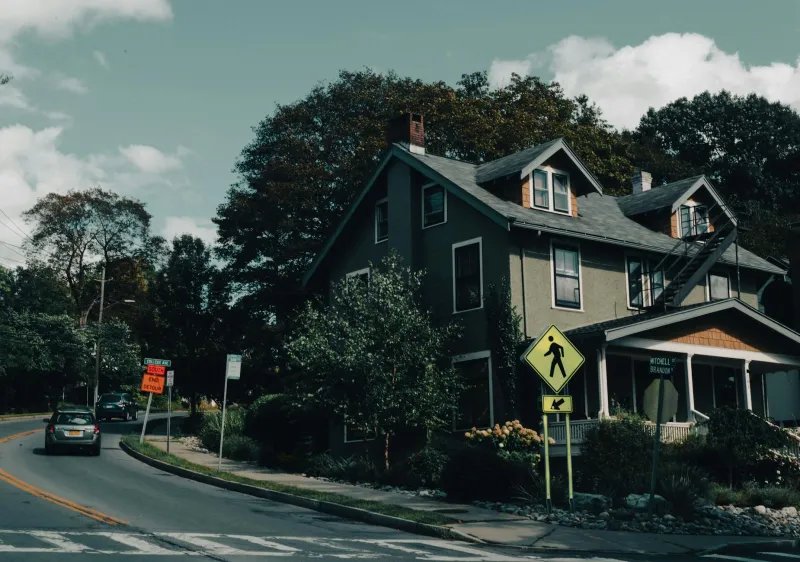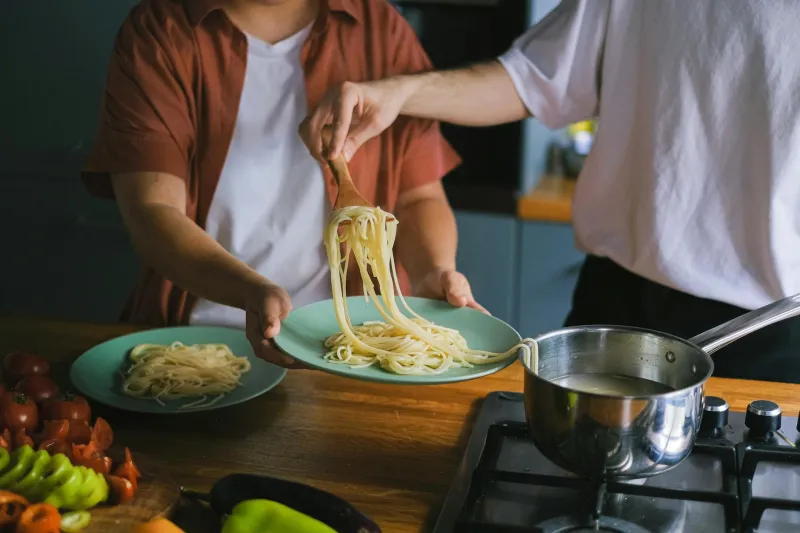
Every Sunday at 4 PM, the aroma of roasting beef would drift through Betty Morrison's suburban Chicago home. The pot roast had been seasoning since morning, surrounded by carrots she'd peeled herself and potatoes she'd scrubbed clean. By 6 PM, three generations would gather around her dining room table for a meal that had taken most of the day to prepare.
That was 1965. Betty's granddaughter Sarah lives in the same neighborhood today. Last Sunday at 6 PM, she heated up a Stouffer's family meal in the microwave while her kids ate Goldfish crackers and watched Netflix on their tablets.
Between Betty's pot roast and Sarah's frozen dinner lies one of the most dramatic cultural shifts in American history — the near-complete abandonment of home cooking.
When Kitchens Were Command Centers
In the post-war era, the American kitchen wasn't just a room — it was mission control for family life. The average housewife in 1965 spent 2.5 hours every day cooking and cleaning up meals. That's more than 17 hours a week, equivalent to a part-time job.
But those hours weren't just about food preparation. They were about rhythm, ritual, and connection. Breakfast meant real oatmeal simmered on the stovetop, not packets zapped in the microwave. Lunch was soup made from yesterday's leftover chicken, not something delivered by DoorDash. Dinner required planning, shopping, chopping, seasoning, and timing multiple dishes to finish simultaneously.
Kitchens were designed for this intensive use. They featured large pantries stocked with basic ingredients: flour, sugar, canned tomatoes, dried beans, real butter. Refrigerators held raw materials, not pre-made meals. Freezers stored meat bought in bulk and vegetables preserved from summer gardens, not Hot Pockets and frozen pizzas.
The ritual extended beyond cooking itself. Children learned to crack eggs and measure flour by standing on step stools next to their mothers. Teenagers earned spending money by helping with elaborate holiday meals. Recipes passed down through generations weren't just instructions — they were family heritage.
The Convenience Revolution
The transformation began slowly in the 1970s, then accelerated rapidly. Food manufacturers discovered they could make enormous profits by moving meal preparation from home kitchens to industrial facilities. Why spend an hour making meatloaf when you could buy one pre-made for just a few dollars more?
The marketing was brilliant. Convenience foods weren't sold as inferior alternatives — they were positioned as liberation. TV dinners freed women from kitchen drudgery. Instant mixes saved precious time. Frozen meals meant more family time, not less cooking.
The statistics tell the story of our surrender. In 1965, Americans spent about 44 minutes per meal on cooking and cleanup. By 1995, that had dropped to 27 minutes. Today, it's just 37 minutes for the entire day — including all three meals and snacks.
Meanwhile, the average American now spends more money eating out than cooking at home. In 1970, restaurants and takeout accounted for just 25% of food spending. Today, it's over 55%. We've essentially outsourced one of humanity's most fundamental activities.
What's Really in That Box?
The rise of processed food represents more than just convenience — it's a complete transformation of what we consider "food." Your grandmother's pantry contained ingredients: flour, salt, sugar, spices, canned vegetables. Today's pantry contains products: things with ingredient lists that read like chemistry experiments.
Consider the humble chicken nugget, now a staple of American childhood. Homemade nuggets involve cutting up chicken, dipping it in egg and breadcrumbs, and frying it — maybe 15 minutes of work. Commercial nuggets contain over 30 ingredients, including "natural flavors" that aren't natural, preservatives with unpronounceable names, and enough sodium to make your grandmother faint.
The average supermarket in 1970 carried about 8,000 products. Today's stores stock over 40,000 items, but most aren't actually food in any traditional sense. They're food-like products designed for maximum shelf life, not maximum nutrition.
The Kitchen Became a Museum
Ironically, as Americans stopped cooking, kitchen design became more elaborate than ever. Modern homes feature kitchens that would have been unimaginable in Betty Morrison's era: granite countertops, professional-grade appliances, wine fridges, and islands bigger than most 1960s bedrooms.
But these showcase kitchens often go unused. The average American kitchen contains a $3,000 range that's primarily used to reheat takeout and a $2,000 refrigerator that mostly stores beverages and leftover restaurant meals. We've created the most beautiful, best-equipped kitchens in human history — and we use them less than any generation before us.
The irony deepens when you consider that cooking has simultaneously become entertainment. Food Network, cooking shows, celebrity chefs, and Instagram food photos are more popular than ever. We're obsessed with watching other people cook, just not doing it ourselves.
What We Lost in Translation
The decline of home cooking represents more than just a shift in meal preparation — it's fundamentally changed how families connect, how children learn, and how we relate to food itself.
Meals used to be natural gathering points. When dinner took an hour to prepare and couldn't be easily reheated, families had strong incentives to eat together. Today, with everyone able to grab something different at any time, the shared meal has become increasingly rare. Only about 30% of American families eat dinner together regularly, compared to nearly 100% in the 1960s.
Children growing up in the convenience era miss crucial learning opportunities. Cooking teaches math (measuring), science (how heat changes ingredients), planning (timing multiple dishes), and patience (waiting for bread to rise). Kids who never crack an egg or knead dough miss these fundamental life skills.
Perhaps most importantly, we've lost the connection between effort and nourishment. When meals appear instantly with minimal work, food becomes just another consumer product rather than something deserving care and attention. The ritual of preparation — the chopping, seasoning, and stirring that our ancestors considered meditation — has been replaced by the ritual of consumption.
The Hidden Costs
The convenience revolution came with costs that weren't obvious at first but are becoming clearer over time. Health outcomes provide the starkest evidence. Obesity rates have tripled since the 1970s, coinciding almost exactly with the rise of processed foods and the decline of home cooking.
The economic costs are substantial too. Despite promises that convenience foods would save money, the opposite proved true. The average American family now spends more on food than previous generations, despite doing far less work to prepare it. Restaurant meals and processed foods carry enormous markups compared to cooking from basic ingredients.
Cultural costs may be the highest of all. Food traditions that survived for generations have disappeared in a single lifetime. Ethnic cuisines that required specific techniques and ingredients have been reduced to simplified frozen versions. Regional specialties have given way to national chain restaurants.
The New Kitchen Rebels
Not everyone has surrendered to the convenience culture. A growing movement of Americans is rediscovering the kitchen, driven by concerns about health, environment, and authenticity. Farmers' markets, community gardens, and cooking classes are experiencing unprecedented growth.
Some families are experimenting with "slow food" approaches that prioritize quality ingredients and traditional techniques. Others are teaching their children to cook as a form of cultural preservation. Young adults who grew up on microwave meals are learning to bake bread and can vegetables.
These kitchen rebels face real challenges. In a world designed around convenience, cooking from scratch requires swimming against powerful currents. But they're discovering what their grandparents knew: that the work of feeding people well is one of life's most fundamental and satisfying activities.
What We Can Still Choose
The story of American cooking isn't over. We can't return to the 1960s — nor should we want to repeat an era when kitchen work fell almost entirely on women. But we can choose to reclaim some of what we've lost.
This doesn't mean abandoning all convenience foods or spending hours every day in the kitchen. It means finding a balance that honors both efficiency and nourishment, convenience and connection.
Betty Morrison's pot roast required skills and time that seem impossible in today's world. But Sarah could learn to roast a chicken on Sunday afternoon, creating leftovers for the week and filling her home with the same aromas that once defined family life.
The kitchen is waiting. The question is whether we'll remember how to use it for something more than reheating what others have made for us.