The Road That Ate Your Summer Vacation — And How America Paved Over It
The Road That Ate Your Summer Vacation — And How America Paved Over It
Imagine packing your car for a cross-country drive, but instead of a playlist and a coffee thermos, you're loading a hand-crank jack, a canvas tent, and enough canned food to survive a minor catastrophe. That was the reality for the handful of adventurous Americans who attempted coast-to-coast travel in the early 1920s. The trip from New York to Los Angeles wasn't a vacation. It was closer to a frontier crossing.
Today, you can drive that same route in roughly 40 hours of seat time. You can fly it in five. The distance hasn't changed — roughly 2,800 miles — but America's relationship with that distance has been completely transformed. How did a journey that once consumed weeks of your life shrink into a long weekend?
When the Road Was the Enemy
In 1919, a young Army officer named Dwight D. Eisenhower joined a military convoy attempting to cross the United States by motor vehicle. The mission was partly logistical, partly a publicity stunt to promote automobile travel. It took them 62 days.
The convoy battled roads that dissolved into mud after rainfall, wooden bridges that buckled under the weight of military trucks, and stretches of the country where "road" was a generous description for a rutted dirt path. Eisenhower later described the experience as an adventure, but also a revelation — the United States had no real road infrastructure to speak of.
For civilian travelers in that era, the situation was only marginally better. The Lincoln Highway, established in 1913 as the first transcontinental route, was technically a road in name. In practice, it was a patchwork of local roads, gravel tracks, and occasional paved sections stitched together across 14 states. Early motorists were advised to carry at least two spare tires, a basic tool kit, and the emotional resilience to accept that something would go wrong.
Getting stuck in the mud wasn't an inconvenience — it was a scheduled event.
The Human Cost of Crossing the Country
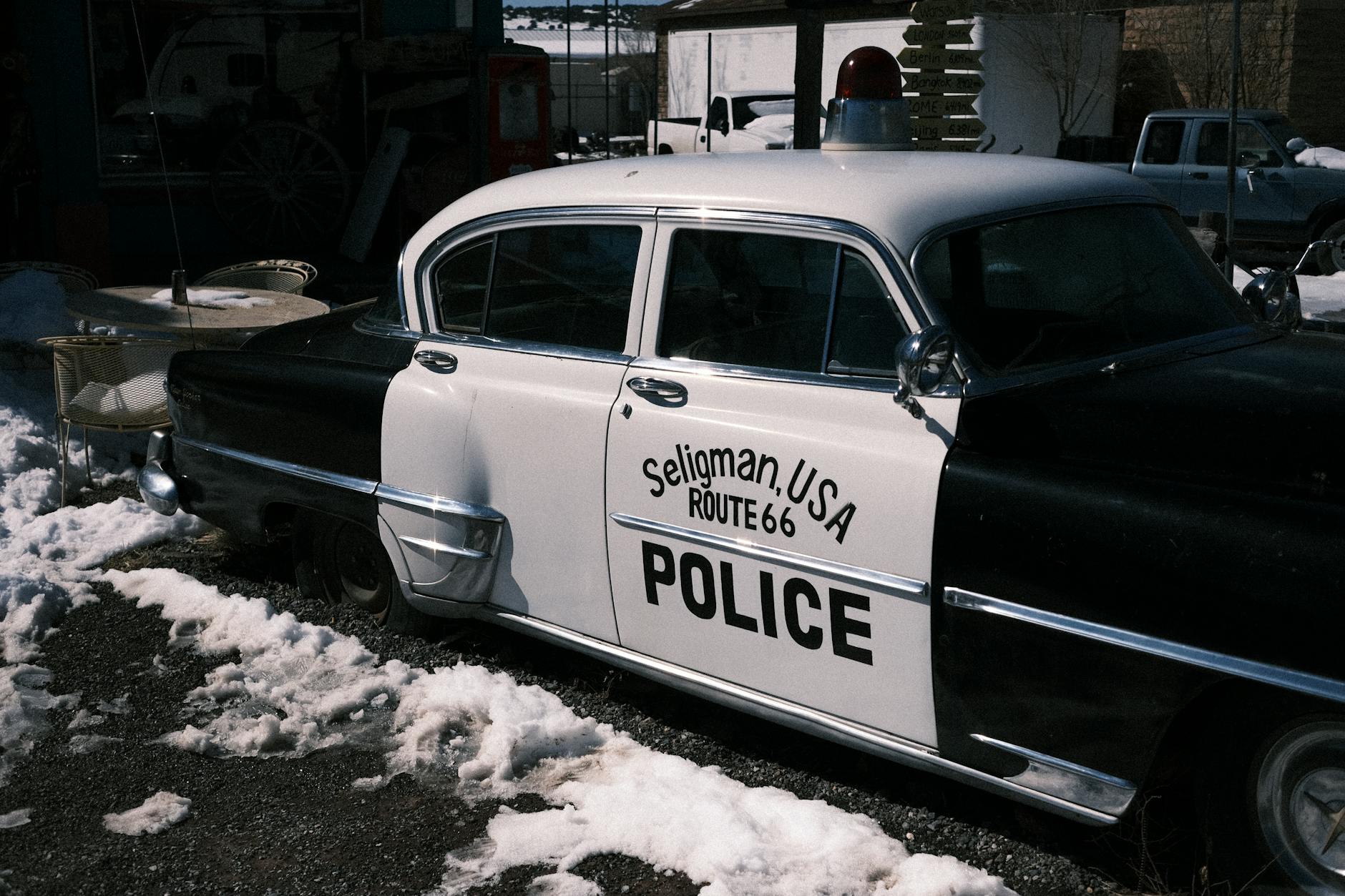
For most Americans in the 1920s and 1930s, a cross-country trip wasn't a leisure choice. It was something you did because you had to — chasing work, fleeing hardship, or relocating entirely. The Dust Bowl migration of the 1930s sent hundreds of thousands of families onto Route 66 in overloaded cars and trucks, heading west toward California. John Steinbeck immortalized the journey in The Grapes of Wrath, and it wasn't a flattering portrait. The road was punishing, the distances brutal, and the welcome at the other end often cold.
Even for middle-class families with reliable cars, a cross-country drive in the 1940s meant planning around daylight hours, hunting for gas stations in rural stretches, and navigating with paper maps that were often outdated before they were printed. Motels — the word itself a portmanteau of "motor" and "hotel" — were just beginning to appear along major routes, offering a more dignified alternative to roadside camping.
The romance of the open road existed. But it came wrapped in genuine inconvenience.
Eisenhower's Revenge on the Mud
The man who had spent 62 days crawling across America in 1919 eventually got to do something about it. As President, Eisenhower signed the Federal Aid Highway Act in 1956, authorizing the construction of 41,000 miles of limited-access highways across the country. The stated rationale was partly military — the Cold War made planners nervous about the country's ability to move troops and evacuate cities — but the civilian benefits were obvious and enormous.
Construction proceeded through the late 1950s, 1960s, and into the 1970s, fundamentally reshaping American geography. Towns that sat on the new interstates boomed. Towns bypassed by the routes sometimes withered. The highway system didn't just connect America — it reorganized it.
By the time the Interstate Highway System was largely complete, a drive from New York to Los Angeles had become something genuinely manageable. Two to three days of driving, with predictable fuel stops, standardized signage, and a Holiday Inn every hundred miles or so. The trip still required commitment, but it no longer required courage.
Five Hours vs. Forty Hours vs. Sixty-Two Days
The contrast between eras is almost difficult to absorb. The 1919 military convoy: 62 days. A 1940s family road trip: roughly two to three weeks, with significant uncertainty. A modern interstate drive: around 40 hours of actual driving time, typically spread across three to four days. A flight: five hours, door to terminal.
And yet something interesting has happened. As the physical friction of cross-country travel has dissolved, the desire for the road trip has actually grown. Americans took more road trips in the years following the pandemic than at almost any point in recent memory. There's clearly something about the journey itself that people want to preserve, even when they don't have to take it.
Maybe Eisenhower's highway system didn't kill the road trip. Maybe it finally made it something ordinary people could actually enjoy, rather than merely endure.
What Distance Actually Means Now
Here's the part worth sitting with: your great-grandparents may have lived their entire lives within 50 miles of where they were born, not because they lacked curiosity, but because the friction of movement was simply that high. Distance was a genuine barrier — to family, to opportunity, to experience.
Today, a spontaneous flight from New York to Los Angeles costs less, in inflation-adjusted terms, than a 1950s cross-country train ticket. The country is the same size it always was. But in every way that actually matters to how people live their lives, America got a lot smaller.
Sixty-two days to five hours. That's not just infrastructure. That's a completely different relationship with the country you live in.